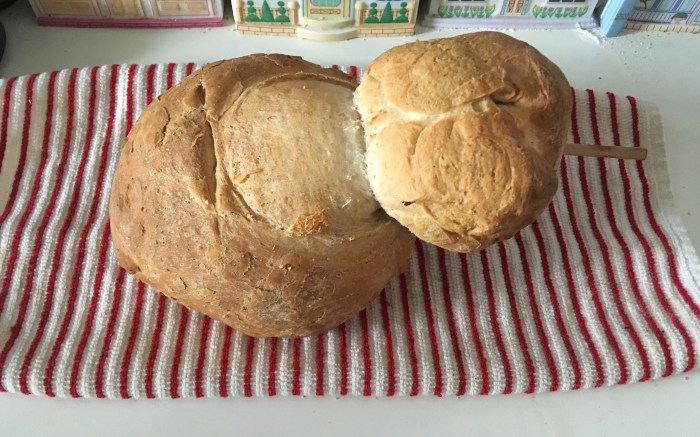
 It was different this time.
Instead of the usual tumble of ingredients cascading from the cupboards, sprays of spices gracefully arching from one end of the kitchen to the other, a true crazy salad of culinary invention, this was something else entirely. It was simple baking, nothing more than flours, salt, yeast and water, but like all things of great beauty, really wasn’t simple at all.
Sometime ago I came across a lovely piece from the marvelous Paper and Salt (paperandsalt.org) blog, on Virginia Woolf and her immense pride and preoccupation with cookery and particularly the creation of what even in Woolf’s time would have been considered an unfashionable loaf of bread: The Cottage Loaf. Bulbous, unwieldy, awkward, Paper and Salt surmised the odd shape of this bread was created to save horizontal space in small ovens. And yet, as Paper and Salt note, Virginia Woolf herself took immense pride in crafting this old fashioned, traditional English bread, readily leaving her writing to elbow her cook out of the way to knead, to mold, to shape. Cooking, and especially bread baking, it seems gave Woolf a sense of calm and comfort. Like so many others I adore her work. I wanted that kind of comfort for her. But I also I wanted in some small way to experience it.
I wondered about this. Writing I think is often an attempt to assuage a gnawing hunger. And yet, what happens when one writes? There an avalanche of literarily thousands of words as you gingerly reach out into the torrent to hopefully capture a few precious pebbles to cup in your hands. Sometimes this is sheer terror. But gather what you will, you then polish them, cherish them, and pile them carefully into sentences, wincing as you vaguely recall the rules of grammar and syntax. You lash the trembling piles of your sentences together to move others, to to express the inexpressible. To give pleasure. To be memorable. To maybe, just maybe, leave something of lasting value to the world. Especially for someone of of Virginia Woolf’s immense talent, the pressures to create must have been intensely magnified.
One wonders, does any writer truly feel that they’ve done it all right? That they wouldn’t change a sentence, a word, a thought? James Joyce famously continued corrections of Ulysses throughout his life, to such an extent that to this day there is dissension about some of his true intentions. One of the towering works of literature is essentially a work in progress.
But there are respites. For Virginia Woolf it was baking. Something that could be begun, worked methodically, and truly completed. This, as far as I’m concerned, is far more fun than housecleaning. Unsurprisingly, I could find no records at all of Virginia Woolf pirouetting around her Bloomsbury abode with a mop and feather duster.
It was decided! For a precious afternoon then, I would slip on Virginia Woolf’s own apron to make her favorite bread. And so I set out to make The Cottage Loaf.
Squinting hard at the recipe, I began by carefully measuring and mixing, solemnly kneading and waiting and watching, reveling in what I hoped would be a meditative experience that left me serene and centered.
But I am who I am. I typically bake and cook to jazz standards, punching dough and stirring the contents of pots in time to the beat of Gene Krupa or the thrum of Django Reinhard. So after a bit I reverted to typical form, poufs of flour hovering around me like dust from the skids at the Indy 500, punching at the dough like a pint sized Joe Louis. Moreover, I have found that the results of my cooking and baking endeavors are enhanced with a nearby glass of chardonnay.
This may be why the resulting Cottage Loaf possesses a rather atypical slooped roof.
It didn’t matter. While I did not channel Virginia Woolf in the slightest, in my own inefficiently efficient way I’d like to think that I felt some of her joy in completing a task, in creating something that if not perfect, was quite real.
Moreover, I think I understand why Virginia Woolf loved to bake.
I stared at the Cottage Loaf and for a moment or two I could not imaging cutting into it. But eventually I did, slowly dribbling honey on each slice, savoring the sweetness.
***
The inspiration for this post comes from the excellent paperandsalt.org literary cooking blog. They’ve posted the Virginia Woolf Cottage Loaf recipe. Do check them out via the link below.
 My mouth has been fogged and cottony, the haggard repetition of mundane meals dulling my taste buds and muting my wintery senses. A conveyer belt of tedium: tepid tea and goodforme, mulitgrain toast, neon orange baby carrots dutifully dipped in bland hummus, blanched chicken breasts and burned burgers. Squinch my eyes shut and I’m sure I couldn’t tell one from the other. I root through the cupboards with the crazed abandon of a raccoon foraging through the trash but alas, come up unsated and empty handed.
 The Chiapati
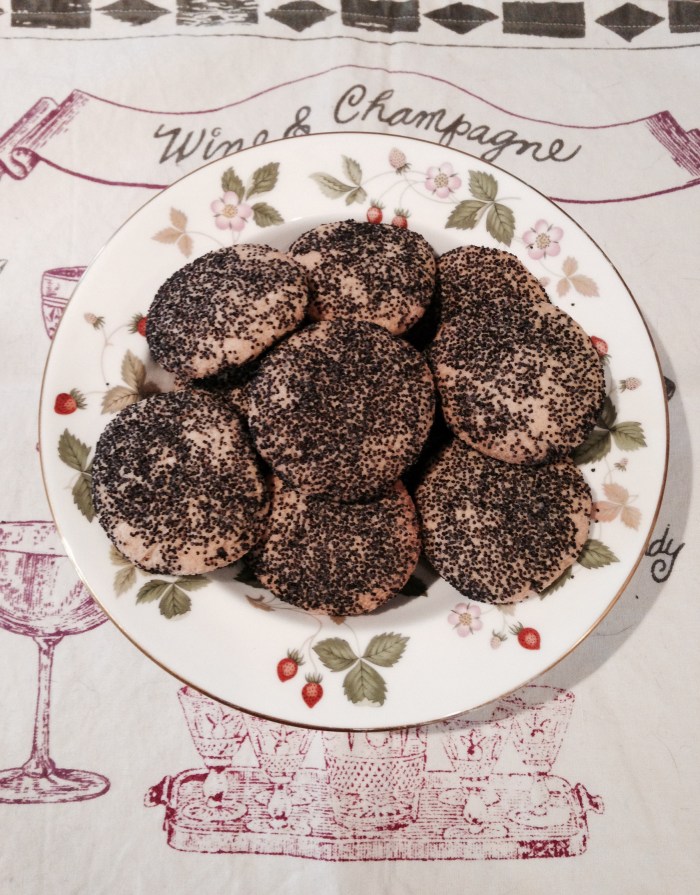 It was really no big deal. Except it was. One heavy, sluggish afternoon I was at home. Alone in the empty kitchen. Alone in the house. Alone. Like an aproned conductor poised on the podium I really knew this melody to my very soul, I’ve played it so many times before. I pulled ingredients from the cupboards, pots and pans from the shelves. Oh please! I could do this with my eyes closed. But I didn’t. When I was finished things were different. There was a plate full of cookies. But not the usual blondie squares. Not the standard oatmeal chocolate chip. Not the ubiquitous rice crispie treats. I had made poppy seed cookies. No one’s favorite. Except mine.
 notes from the room in my head