HAPPINESS

FullSizeRender (2)

A throwaway question. A perfunctory answer. “So how are you?” he asked. Unthinking, the answer tumbled from my lips, “I’m great.”

There was a pause before he replied gently. “But you never say that.” And he was right. I never do. Except that I just did. That’s when it hit me.

I was happy. So happy that I hadn’t even noticed.

Well good grief, how did this happen? And how was it that I didn’t see it coming didn’t prepare, didn’t revel? That longed for sensibility, that sweetly elusive quest that launched a thousand well-thumbed self-help books, the favored subject of so much yapping from so many smug and silly daytime talk show hosts. Happiness. It was mine?

I had to cry a little. Not because I was happy. But because I hadn’t realized how long I’d been unhappy.

Had I bull headedly been unwilling to admit how unhappy I had been? Or had I simply been rutted for so long that I hadn’t noticed? Or worse, not cared?

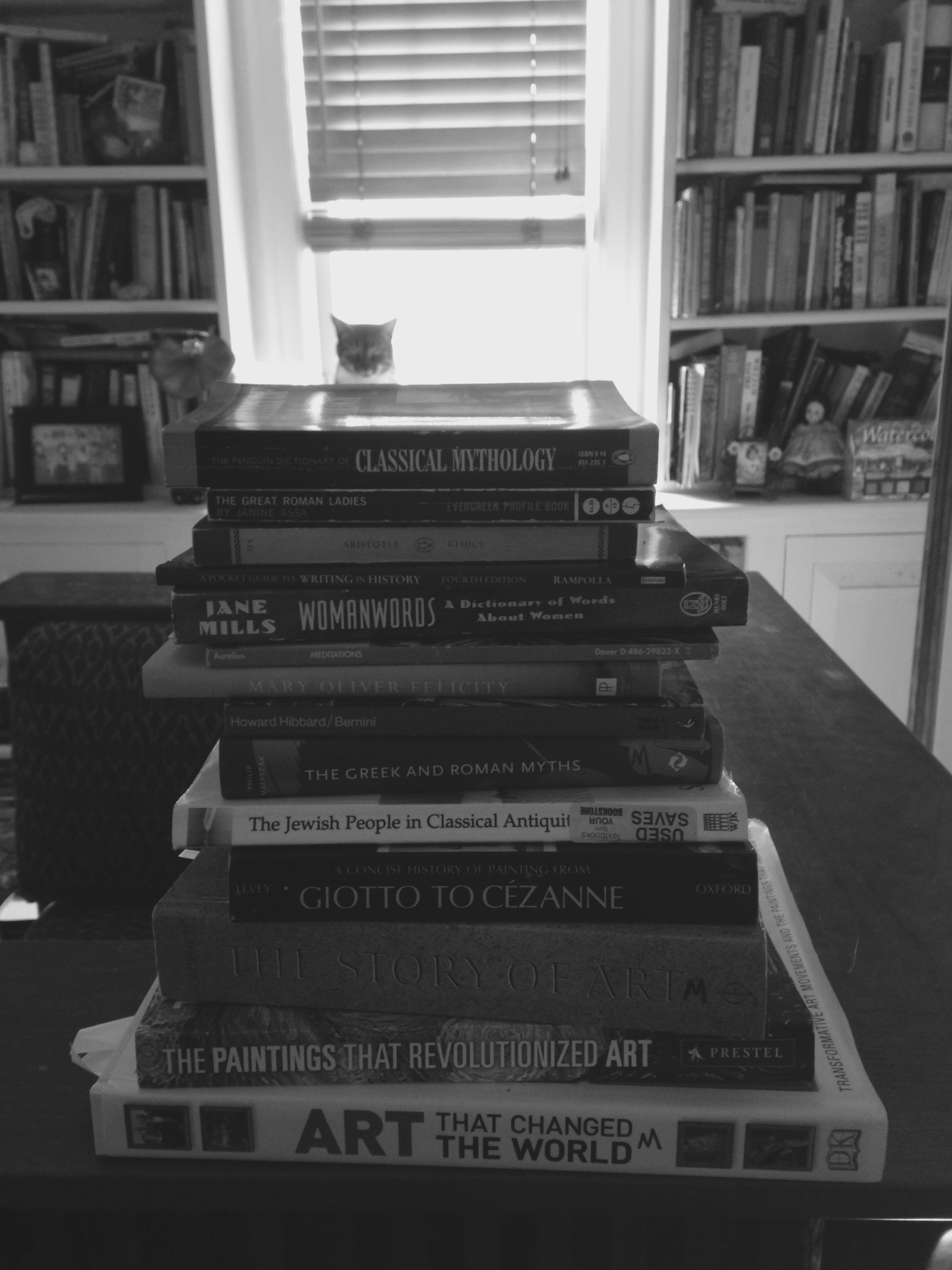
The marvelous Mary Oliver speaks of “a seizure of happiness.” That can certainly be so. But this lovely, pervasive longed for thing snuck up on me. Caught me by surprise and held me.

The thing is, for those who are aware there are always, even in terrible times, moments of happiness, of beauty, of joy.  We snatch greedily at these happy things, grab them and hold on tight. Most of us swing from joyous moment to joyous moment, all the time lurching over the abyss of fear and unhappiness.

But this feeling was something else entirely, pervasive and calm and real. It arrived without fear.

How did it happen? On the surface, it all seems the same. The weird and wonderful cascade of daily life continues. The comfortable old house is still basically held together with duct tape. I’m haunted by sisyphean piles of laundry. My untamable flyaway hair perseveres in having a wayward mind of it’s own. I try to be where the people I love can reach me. I remain small and quiet, often unnoticed and most comfortable in a corner.

And yet there is a difference. I am doing exactly the work I want to be doing in just the way I want to do it. That small thing is everything to me.

Could it be that happiness was there all along, waiting for me to stop searching for it so it could simply suffuse me?

All these thoughts raced through my head before I continued the conversation. I took a deep breath, “And how are you?” I asked. I thought and I hoped, “please be great too.”

THE THICK QUIET

IMG_4264

We were going to be apart for an eternity. Two people. Two different continents. Two whole weeks.

Belaboring over penmanship scratched onto delicate sheets of rice paper was arduous. Phoning was impractical. The internet didn’t yet exist. The thought of separation unbearable. My good friend.

But I had a plan. I always had a plan. At precisely 10 pm Eastern Standard Time I would think of her and she would think of me. Just for a moment. And for a quiet pause we were linked.

But at some point, some how this was lost.

**

ONCE UPON A TIME: THE RIGHT JOB, THE WRONG GIRL

When I first came to New York my whole job consisted of doing something I was and am completely unsuited for, speaking on the phone. I worried no one would answer my calls, or return my calls or frankly exactly what I would say if they did take my calls. I was a publicist, ever trolling media sources to make bookings for writers to promote their books. My voice back then was pitched high and girlish. My boss actually trained me to lower it, bullied me into attempting to sound more powerful and resonant (she smoked, the whole office smoked which helped).    I became adept at parroting, at saying the right thing at the right time on the phone. I sounded good but I felt awful, a mellifluously voiced poser simply reading a script.

**

THE HIDEAWAY DRILL SARGEANT

The clatter of dishes, the drone of the television, the whirl of the washing machine, the blips and clinks and blinks of videogame jingles. A constant happy cacophony of sound . This was home, a comfortable, safe hideaway with my boys and my husband. There was constant motion: dinners to make, doctors appoints to run to, school carnivals, school projects, school meetings. I bark orders and speak in directives: put that pile of clothes away, brush your teeth, please pick up the Crazy Bones before I step on them again, There is so much to say but no time to think about it and even less time to say it. I communicate in sound bites.

**

SO BUSY

I’m just so busy. I’m so proudly preoccupied. The more things I cram into an hour the more time seems to stretch- like an ever expanding balloon. If I were a physicist this might make more actual sense but as I am just a person it does not. I just feel it, all electrified and hyperalert.

What is undeniable is the self-important buzziness of it all. That and a preoccupation so pronounced that I’m apt to walk into walls while reading, motor resolutely in the wrong direction while driving or absentmindedly throw sponges in the freezer or my keys in the trash.

That’s not so terrible. But to be so utterly preoccupied that conversations are blurry and only half-recalled is awful. I have a ready bag of bon mots and directives to reach for in a pinch. But I’m cheating and I know it.

CLOAKED IN QUIET

It’s what we dreamed of. Everyone off everywhere doing what they are meant to be doing. Sometimes the quiet is thick and almost tangible. I sink into it. And at last, once in a while, things slow down again.

Now, if I stay very still, even for a bit, time seems to contract and almost freeze . Sweet snatches of memory help me leap from thought to lingering thought. Once again over the miles, my mind reaches out and connects with those I miss, those I love.

I don’t give those faraway people a specific time to think of me. That would be so incredibly odd! And it doesn’t matter. It’s enough just to hope that they do,

THE SPACE BETWEEN THE WORDS, Post #30

IMG_0271

You can almost always find me up in the deep early o’clocks of the morning. The darkness at that time is thick, almost viscous. It’s paired with a friendly, companionable quiet, a middle of the night symphony full of the muted hum of appliances, a counterpoint of rhythmic breathing from those that actually sleep. I crave this slightly rambunctious quiet. In fact, I truly adore it.

Middle of the night is never boring. There is always something interesting to do. When I was six or seven I would sit on the floor of my room creeping toward the slice of light that came from the bathroom across the hall. If I got there I could read. And if I didn’t feel like reading of course, there were always The Presidents.

Here’s the thing. At some point I’d been given a poster that was ornately festooned with tiny cameos of all the Chief Executives listed in the order of their terms of office. I would sit there in the slice of light, squinting at the page wondering about each of them, memorizing their faces, mulling over pertinent facts about their lives, solemnly considering the glowing accounts of their accomplishments.   Lulled, I would feel calm even if I rarely slept.

These middle of the night encounters with the Chiefs were inspiring. So much so that I eventually read my way through the entire biography section of the Eagle Elementary School library. These were some of the books I read:

Anthony Wayne, Daring Boy, Amelia Earhart, Young Aviator, Albert Einstein, Young Thinker, Thomas Edison, Young Inventor, Crazy Horse, Young War Chief all eagerly snatched up by Cindy Adelman, Young Reader

These were good lives, weren’t they? These were important people whose whole lives were inspiring, uplifting. They had to be so, I knew it was so because their stories were captured for all time, printed on rag stock and double-stitched into cardboard bindings. That makes it real, doesn’t it?

But as I grew I came to know people, not just know books. To talk to people. To listen to as many people as I could. Even to love some of them. Every story I came to know was too contradictory, too complex to be committed to 249 pages of adulation. The stories I read when I was small were not the whole stories for any of those people. They couldn’t be. Because a snippet captured for posterity in a book isn’t the whole story for any of us.

Peoples lives: their messy, complicated, heroic, fearful, exuberant and sometimes perfectly imperfect lives, are lived in the light. But that’s not real the story. Instead it’s the intangibles, the space between the words of every person’s story that can truly make for a beautiful, lasting, and worthwhile existence, no matter how many years we have on earth.  That’s what’s real.

Those of us who’ve lost someone dear know all of this. We remember the warm cloak of kindness. We remember the way we loved and were loved in return. We remember the understanding that filled the spaces between words.

These are the things not written. These are the things that are felt. Good lives cherished for all time.

z”l CSH

SHAPED MEMORIES AND A SWEET NEW YEAR

FullSizeRender (1)

I’ve long been envious of the verbal snapshots that the great diarists of the past such as Samuel Pepys or Winston Churchill. With a key observation, a pithy phrase, a few jotted words, they punctuated their lives in ink. I’ve always been amazed at how terse many of these daily observations are. Not verbose. Not show offy. Just a scattering of words that serve as bread-crumbed path to memory.

I was thinking about this, thinking about so many things really, as I drove drone-like along the highway, having once again helped set the year in motion, having sent everyone off to school once again. I miss them. I want so much to remember. I’m frightened that I won’t remember. I fret.

But remembering should be easy, shouldn’t it? With the touch of a button I can snap off a dozen photos, with another swipe I can organize and categorize them. With a final fillip I can even swirl them into a Sundance quality montage. The funny thing is, I don’t do this. I don’t really want to.

September is always a pull up your socks kind of a month.   New shoes, new teachers, new ideas, new beginnings. Moving forward, there is always the pull of the past, the fear of forgetting where you came from, from what brought you to this point to get you where you’re going.

I’ve stopped trying to remember everything. That’s overwhelming, impossible. But there is another way. Memory for me has become kaleidoscopic, ever shifting, always responsive to another twist of the dial. I sieve my memories, washing away the dross. It’s true there are gaps. It’s true my thoughts often aren’t always linear. Instead my memories are responsive to where I am and to what I’m doing. They’re malleable. To crystallize them, freeze them wouldn’t work for me. Because for me, memory isn’t a trip to the past so much as a path to the present.

So while I do take and keep photographs of those I care for they’re not the first place I look when I want to stir memories. Instead I’ll conjure images that are for me far more evocative and powerful.

  • Miniature cacti plants in an apartment window
  • A trio of tiny socks
  • Double scoop of Superman ice cream
  • A box of Lucky Charms.
  • A bottle of coke and a stack of Hydrox
  • Double- breasted pinstriped suits
  • A green-striped rugby shirt
  • A Charles Culver camel
  • “Bow-ties are cool.”
  • The elusive Charizard
  • The Strand
  • “Come, you Game Boys!”
  • Piles of Pocket DKs
  • “Just a slice” of pumpkin pie
  • Tins of Mandelbrot
  • Pizza Bob’s
  • A Double-Tiered, handmade, backyard fort
  • A deep green GTO
  • “Breathe”
  • A pint of Haagen-Dazs, a dishtowel, a spoon
  • Sunglasses inside
  • A giant bowl of cherries

The swirling thoughts that are stirred bring all of these people closest to me vividly back once again. These images are my rubric, my guideposts. To think in images keeps memory alive, not pasted into a scrapbook. It’s a brave and thrilling thing to do. It’s worth it to give yourself the pleasure of crafting memory instead of grasping for it.

The great diarists left themselves a map to recreating memory. I try to do the same. What a gift, what a joy! Once again my mind returns to the magical Richard Jeffries who said in The Story of My Heart,

“Full to the brim of the wondrous past, I felt the wondrous present!”

And that is just how I want to feel, how I hope everyone feels, as we once again sweep into the brace of September and onward to a sweet new year.

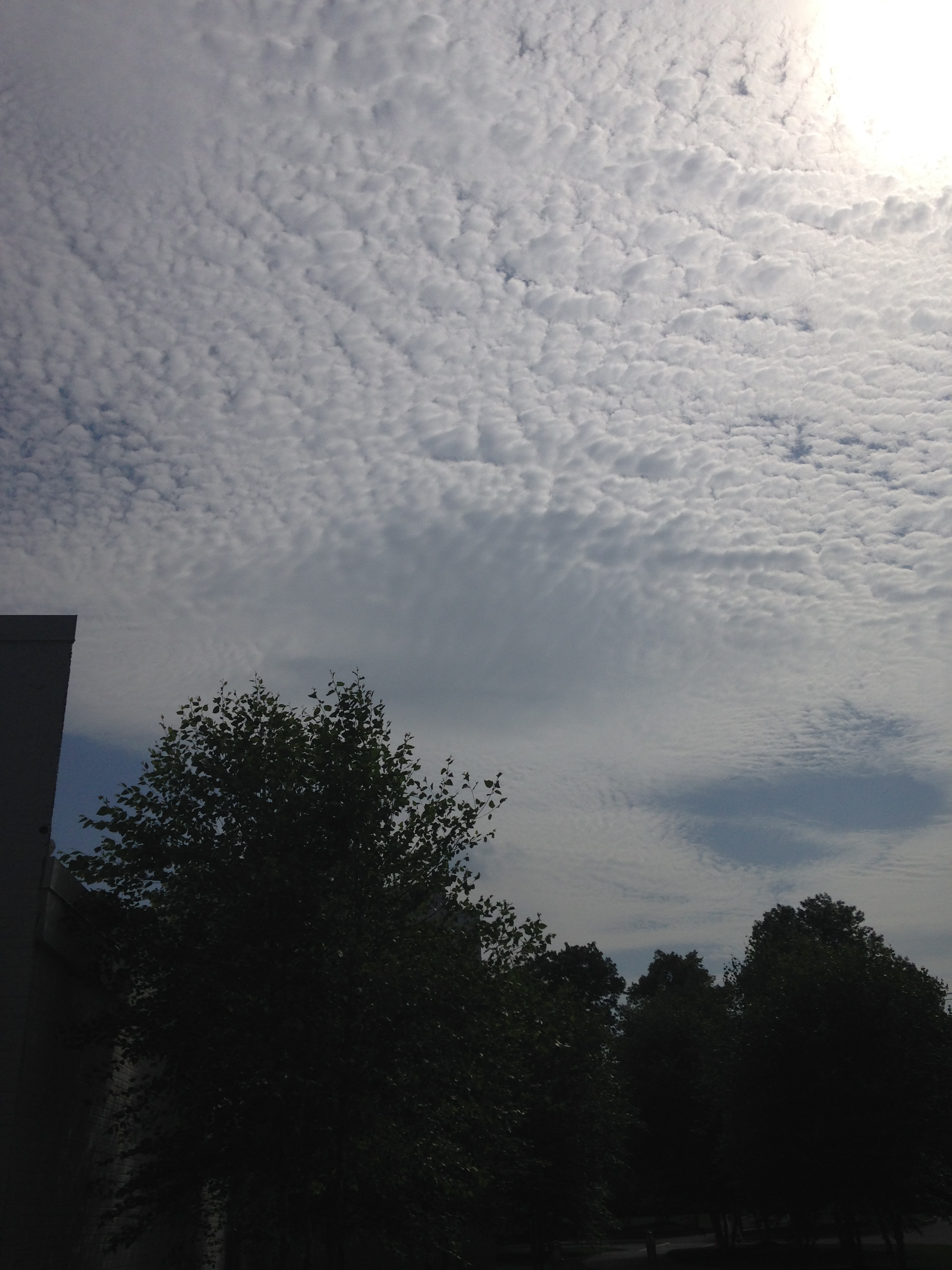
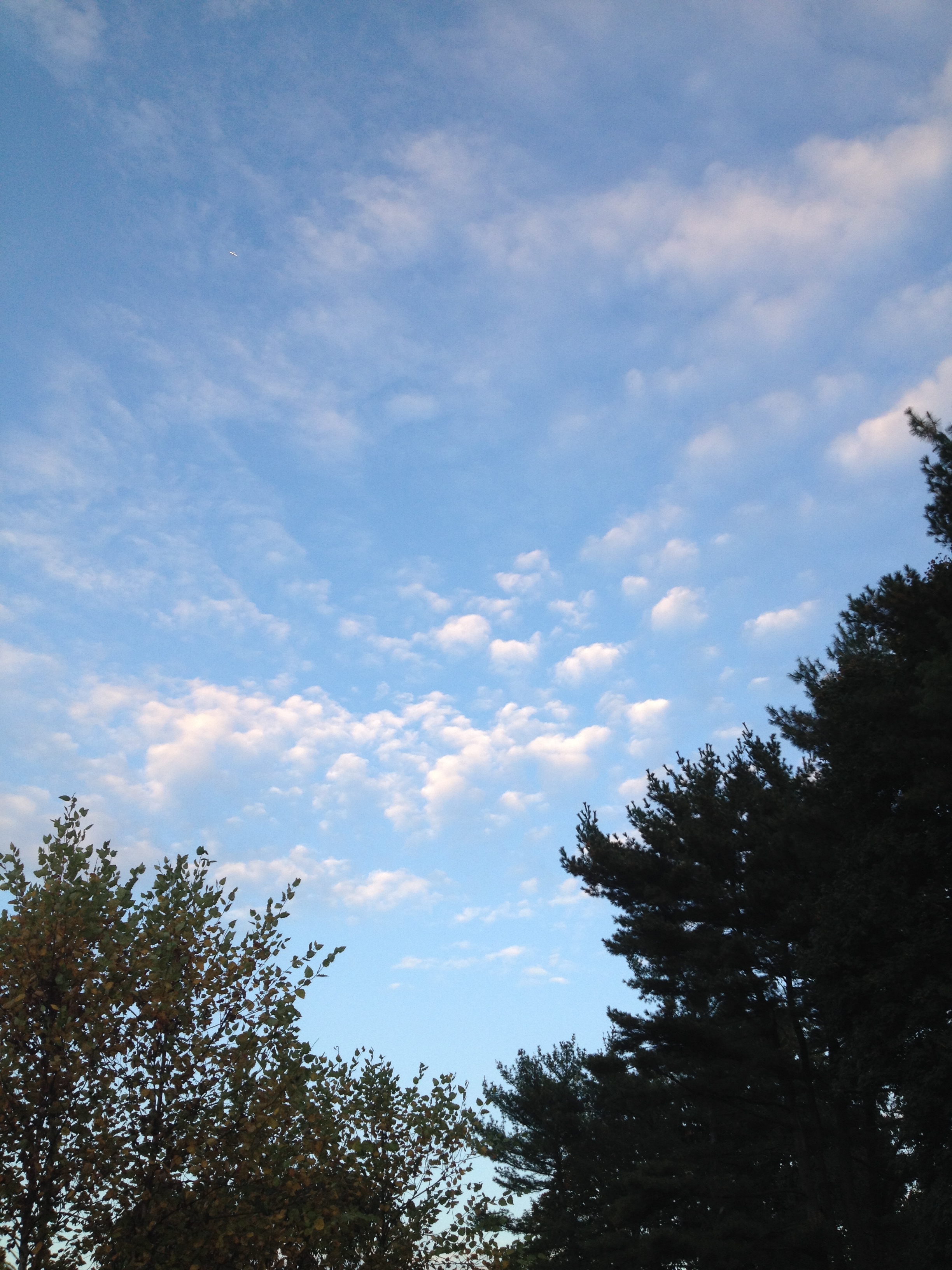
READING THE CLOUDS: The secret to telling time by the sky. Post number 28.

IMG_3013

If tales are true, my great-grandmother, Rachel Leah (z”l) could tell time simply by looking at the sky. She knew the time right to the minute just by a glance at the clouds.

What a marvelous, wonderful, amazing thing! What would it be like, I wondered, to be so in tune with the world, so keyed into its rhythms, that you could literally read the sky? There had to be a secret! Of course there was a secret.

I didn’t know how she did it. I never had a chance to ask Grandma Rachel Leah how she learned to tell time by the sky, to read the clouds. But I so wanted to do this. There just had to be a way.

Part 1.

On warm summer days when we were small my sisters and I would lay out on the grass in front of our house and watch the soft, puffy clouds lazily move across the sky.  Of course there was a game: you had to be first to spot a shape in the cloud and point it out before it drifted apart. Did we play for minutes or was it hours? I never knew.

Part 2.

Staring at clouds? What an utter waste of time.   Pretending a cloud was a bunny that morphed into a cowboy that transformed into an ice cream cone was of no use whatsoever. I was too old, too dressed up to lie in the grass anyway. I could get a reasonable weather forecast, and pinch a few jokes, from Sonny Elliot on Channel 4 instead.

Part 3.

If you look carefully you’ll see that my left forearm is deeply tanned. Not so my right. I spend so many hours driving this one and that one from one place to another that the sun has baked my left arm into what’s known in select circles as a true trucker tan. But I am not a trucker—just a mom behind the wheel.

I rarely look up. Why bother? I have my watch. I really love my watch. Besides. I can’t risk misreading the time—I can’t let anyone down by being late.

Part 4.

How odd that I can’t stop looking at the sky. I love the clouds the best. It’s a proud parade, a stunning Shakespearean drama, a breathtaking pageant that is so enthralling I’m afraid to miss even a moment.I sneak glances, and then find myself staring up at the clouds throughout the day. I can almost feel the texture of certain clouds; I love the interplay as they dance across the sky. I love that I can recognize cloud types but the array of clouds across the sky is constantly changing. I’m afraid to stop looking or I’ll miss something once-in-a-lifetime magnificent.

Old habits die hard. I search out and study the names of the clouds, Altostratus, Contrail, Fibratus. I learn what they mean. Some sightings such as Cumulus and Stratus are quite common. Others, like the Kelvin-Helmholtz or Asperatus are so rare that one could live a lifetime and never spot them. I think about the works of Jean-Honore Fragonard and J.M.W. Turner, two of the greatest painters of clouds and know that as beautiful as their works are what they were interpreting was far more astounding. I look up and think about the scores of people who have been swept up by the beauty of clouds since the beginning of time. But really I don’t want to pontificate on the clouds, I want to luxuriate. So I do.

In his book, The Story of My Heart: An Autobiography (1883), English essayist and nature writer Richard Jeffries says, “for artificial purposes time is agreed on, but really there is no such thing.”

If tales are true my Grandma Rachel Leah could tell time just by looking at the sky. I cannot. But then maybe her secret was that with an appreciation of clouds, of nature, of the world itself, time has no real meaning.

Look up and see the sky. Beauty suffuses—it lingers – it lasts.

INVISIBLE ANCHORS

FullSizeRender (1)

Oh, give me a break. It wasn’t such a big deal. Really it wasn’t.

Except that it was. A crushed watch. A cracked French Press.   A smashed wine glass. Nothing was terribly expensive. Everything was replaceable. I was inconsolable.

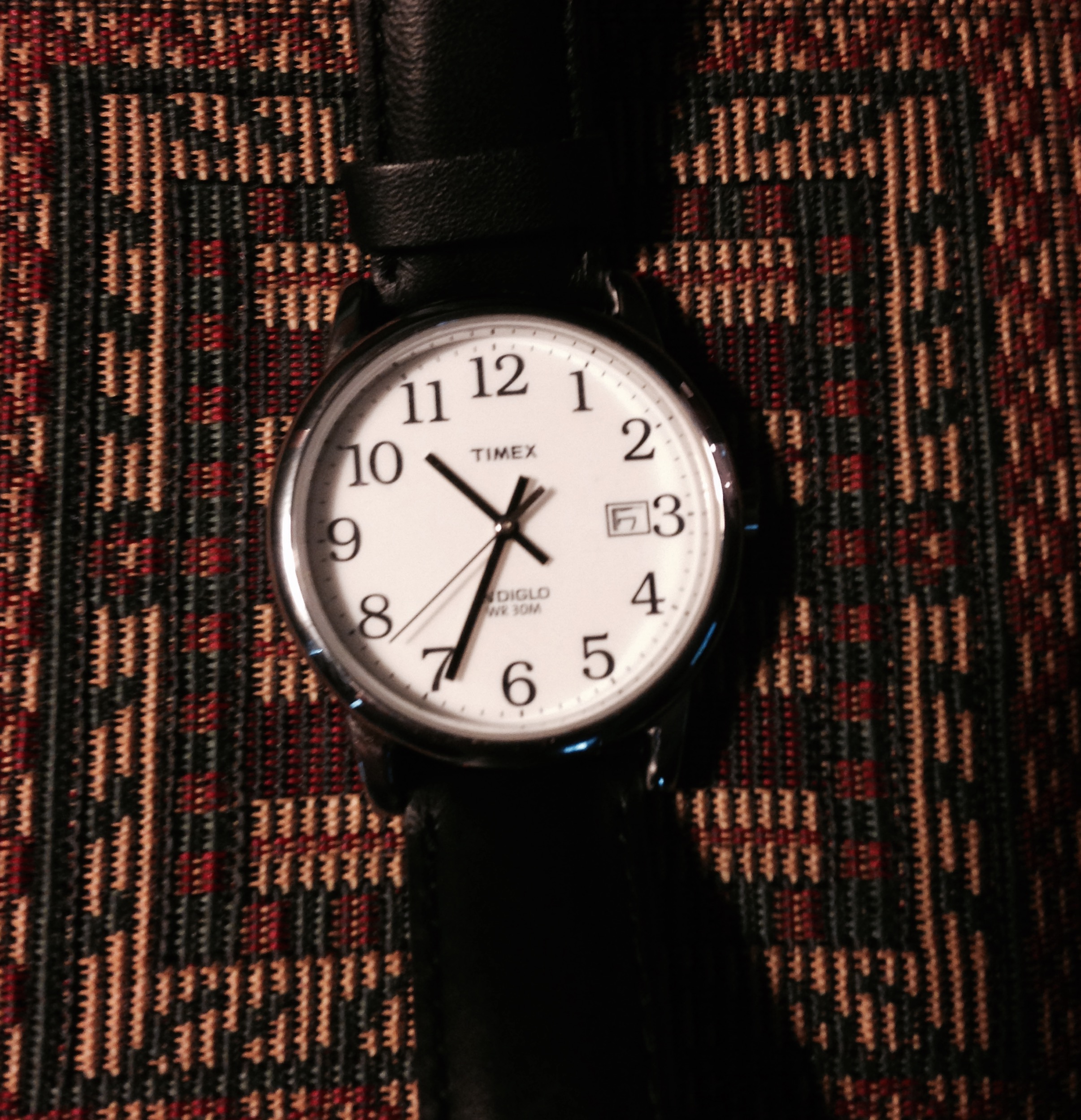
The watch was a plain and simple Timex (so much for their old “takes a lickin’ keeps on tickin’ “ slogan) but I loved the way it hung on my right wrist just so, timed precisely to the second. My sense of time is very private; I always have the face turned inward. The watch steadily ticked the heartbeat of my day. One of the cat’s paws had caught the band and tore it from my wrist.

As for the French Press, over the years I’ve gained a true mastery of the seven precise and precisely timed steps to a cup of coffee, which for me has to be black, very strong and very hot. That I manage to do this when I am basically sleeping on my feet each morning is a source of tremendous pride. You probably think I dropped it. I didn’t. It somehow cracked all by itself. Mysterious. And for me, weirdly gut-wrenching.

The blender teetered and shoved the bowl, which hit the spoon that tipped the wine glass that fell over the precipice of the countertop. It should have been safely out of the way but it wasn’t. That glass was a gift from my son. I felt shattered.

And ridiculous. Good grief, that’s all it took to cut my moorings? To cast me adrift? Small insignificant nothings, a watch, a French Press, a wine glass?

***

Long ago, before I had people to take care of, before I had people who cared for me, I packed a single suitcase, self-consciously cut every tie I could, and left for New York. I was twenty-two.

I had a one-way ticket, an eager, anxious-to-please expression, the wrong clothes, and a vague job offer. I didn’t know anyone in New York. I was the sweet natured, befuddled, sure-to-make-good heroine of a million movies. But this was the real thing.

The job had disappeared by the time I arrived. I found another. I lived in cinder-blocked splendor at the 92nd Street Y, left to rent a room at 104th street from Shalom Aleichem’s aged mistress, steps away from the then notorious Manhattan Avenue. Singed my eyebrows attempting to light the gas stove. Somehow found a boyfriend from Long Island. Nice but dull- I gave him up. Afraid of the subways, I road the buses. Gave up my seat to another, I was pick pocketed. Later, I was mugged. My wallet came back to me both times. It was a good sign and I clung to it.

But the city was pulsating and syncopated and grittily beautiful. I loved the ordered disorder of it all. I loved that even a tiny bit of it was mine.

Most days I made my own lunch. It was no big deal, usually just peanut butter sandwiches and fruit. But after a while I found myself in a rhythm with this. I took great care to make myself lunches, cutting everything just so and even sometimes putting in treats. Eventually I bought myself an actual lunch box, -just plain green, nothing flashy– and every night packed it carefully for the next day. Every noon I opened it and was pleased.

Of course I eventually lost the lunchbox, leaving it on the seat of the bus one day when I was both tired and rushing. If you imagine that I was as devastated about that lost as I was just now about losing my watch, my French Press, and my wine glass you’ll be right. I loved those odd, seemingly insignificant little things. But while the things were lost something else was left. I knew how to care for myself. To be kind to myself. That was never lost, or shattered or smashed at all. Couldn’t be.

So of course I’ve replaced all the little things, the watch, the French Press, the wine glass (actually, my son knows I break things. He originally gave me two). And I set to my rituals once again. I am caring for myself.

Someday, if I need it, I’ll buy myself another lunch box as well.

I don’t know why things break or are lost, often in frustrating, cacophonous concert with each other. Absentmindedness? Sheer clumsiness? Just plain fate?

Or maybe it’s nothing more than a reminder to value the invisible anchors that we all create to keep us steady in the storm, to remember to care for ourselves as we strive to care for those we love.

MY OWN “10-MINUTE UNIVERSITY”

IMG_3130

It was a brilliant concept. In the late 1980s Workman published 10-Minute University, a book and recording which purported to “teach” only the things you’d need to remember from a typical four-year university experience. Presented by the world’s fastest talking man, John Moschitta, Jr., TMU shrunk learning down to bite-sized nuggets on topics from comparative literature to physics to football.  It was hilarious. What I didn’t realize until now was that it was also sort of true. And I wondered, what did I actually remember about college? What did I learn?

Life, being what it is, keeps most of our heads clogged with the demands of the present. But the past is always there for us, patiently waiting to be remembered, reconsidered, and sometimes redefined.

1.

My head bounces first to Pinball Pete’s. I walk through a nondescript door into a darkened room. It’s spangled with flashing lights and jangled with the clash of tinny music. I feed two single dollar bills into the coin changer for my daily quota of eight quarters. For a little while, or maybe longer if it’s a good day, I am the Frogger Queen, the Pac Man Champ. When I leave I wrap my arms around my books but I feel so great I wish I could just balance them on my head.

2.

I’ve staked out a seat for the evening, end of the row with a little extra elbowroom. I need it: I’m a lefty. The ceilings are high, the lights are low and the silence is thick. We are all in this together, chins jutted out determinedly, all hunched over our books. The competition for seats here in the Grad is intense-get up at your peril or your rail back chair will be forever lost, your books and papers summarily dumped like your laundry, left in the dryer for a mere ten minutes after the cycle completes. But at some point I risk it anyway-I always do–for the lure of the instant coffee machine, a quarter for a cup of viscous black sludge, the most intense caffeine hit on the planet.

3.

There I am, managing to curl up in a straight back booth at Drake’s. In front of me is a dented metal tray. It holds a grilled cinnamon roll and a tiny tin teapot filled with hot Russian Caravan. Sometimes there is instead a glass of limeade and a tuna sandwich, served on WonderBread and cut into perfect quarters. The penny candy wall is just across the way, glass jars filled with everything from nonpareils to malted milk balls, lemon drops to licorice. I am a licorice person. Bored looking girls wearing aqua-colored smock jackets plunge in with scoopers filling red and white striped bags to order. I never leave without one. Actually, I never want to leave.

4.

When I was a little kid we were taught that Henry Ford invented the automobile. Or maybe that was just implied. I’ve never been sure. This may have been a Detroit thing, people here care for their cars so deeply that they identify themselves not just by the cars they drive but by the cars they drove. I am still misty-eyed at the thought of my ’71 cream colored, black roofed Cutlass Supreme. At any rate, I was a grown up before I realized, or was willing to accept, that Henry Ford did not actually invent cars but he did pioneer mass production.

That connection may in fact be what led Tom Monahan, who then ran Dominos, to install a genius oven in his pizza places. That oven ran on the Ford mass production system theory: a call would come in, one of us would take the order, the slip would be instantly transferred to the tosser who threw the dough up the air and stretched it onto a tray, tucking the order slip underneath, where it would be sent down the line to the saucer person, who then moved the pie over to the cheeser person, who would shove the pie to me. My job was to instantly decipher the hieroglyphics on the slip and add the toppings, the worst being sausage because it was sticky, meaning that I’d have to dunk my hands in the olives to moisten them enough to get the sausage on the pie fast enough. Then one quick turn and the pie would be placed on a conveyer belt that carried it through a superhot oven in a handful of minutes.  It slid hot and done down a slide at the end, was folded directly into a waiting pizza box before being thrust into the arms of the delivery guy who drove like a bat out of hell to get it to someone’s front door. All in thirty minutes or less or it was free.

My college job. I was good at this.

5.

I lived on the third floor in East Quad, an old dorm covered in ivy. No air conditioning.   But open windows meant fresh air. And sometimes company.

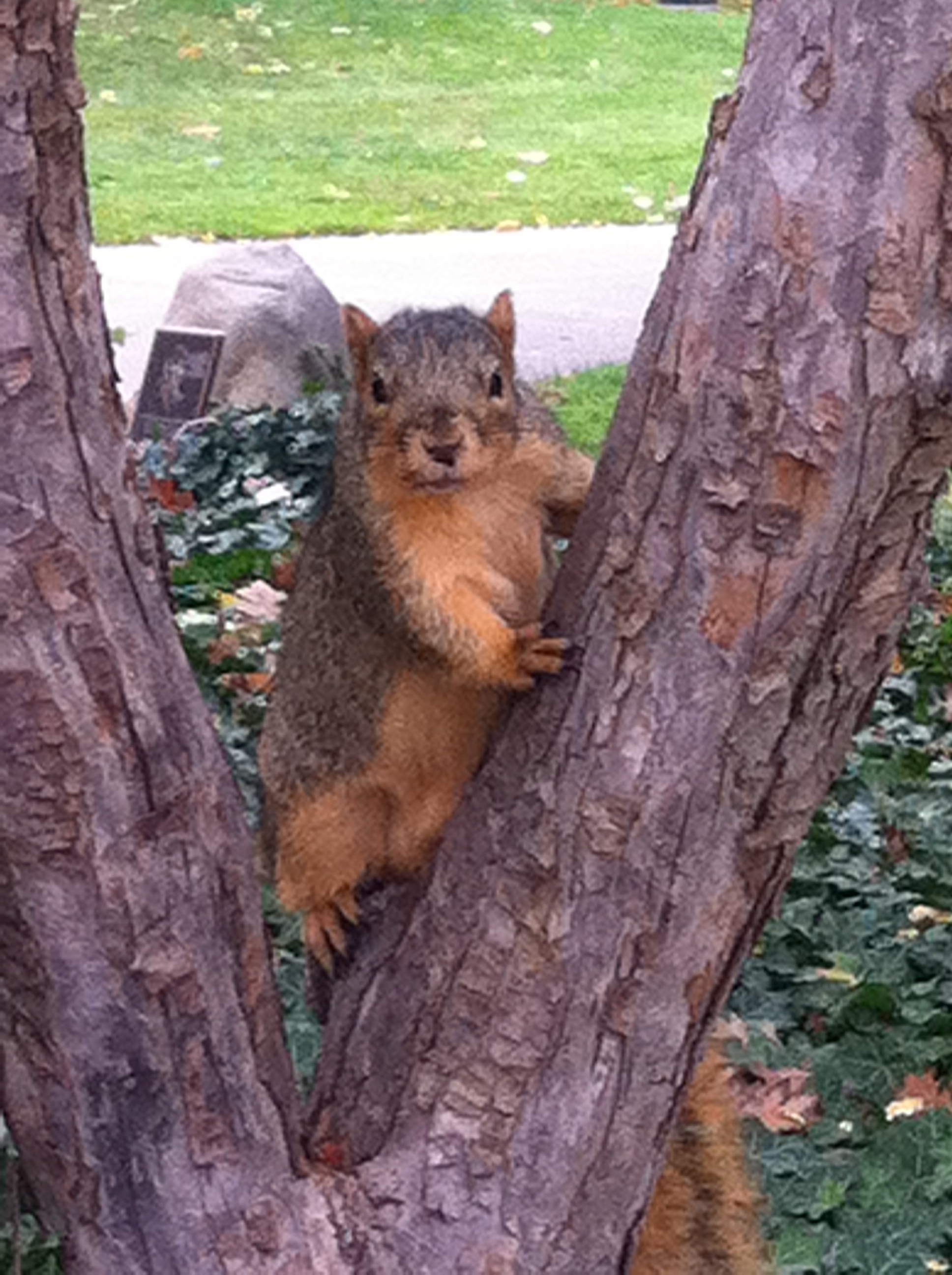
One day I looked out and there was a squirrel sitting on the ledge. He didn’t move. Neither did I. I waited. So did he. We sat in silence for a bit. Finally I gently reached over and placed a cracker on the ledge. He picked it up with both paws and ate the whole thing right there. After nibbling through a few more crackers he looked at me as if to say thanks then scampered away. I thought that was that. It wasn’t. Melvin (if he and I were going to be together like this, he needed a name) returned the next day and every day after that. It became clear that he preferred peanut butter spread on his crackers and he was also fond of raisins.

End of the semester and I hated to leave him. So I left a note for whomever would be taking over my room with detailed instructions to watch out for Melvin and to leave peanut butter crackers for him if possible. I hoped for the best.

***

So I think you’ll agree I learned a great deal in college. My own 10-Minute University takeaway is this:

I to this day I know how to enjoy my own company. I revel in eating well. Sometimes I move fast—other times less so—but I know how to keep the rhythms of my life moving forward. I can be patient when I have to be. I detest sausage, I love licorice, I adore coffee.

Oh. And almost thirty years later, on a visit to my old school with my husband and sons, the tour guide proudly mentioned the most popular club on campus: The University of Michigan Squirrel Club with over four thousand members.   Legend holds that the Squirrel Club, a group that meets on Sunday afternoons to feed peanuts to the squirrels of Ann Arbor, began in my dorm, East Quad, shortly after I left.

Photo credit: Jared R. Frank
CHARLOTTES EVERYWHERE

FullSizeRender (1)

Naturally the thing I love most about the iPhone is the most antiquated thing of all.

It’s the compass, that directional miracle. Turn it on wherever you are, spin and see exactly where you’re headed. Or headed away from. It’s a nonjudgmental GPS without a bossy, irritating voice. I used to play with compasses as a little kid but unlike Einstein, whose scientific genius was sparked as a four year old by the gift of a compass, I just marvel at them. But I haven’t turned mine on in a while.

I’m preoccupied. Piles of laundry, stacks of work, gluts of emails. The pleasure of seeing how high piles can be stacked is sometimes far more interesting than getting to the bottom of them. In sync with the frustration of world economists, roiled by the possible “Grexit” I was feeling completely Sisyphean. It was like being snarled in a web.

How odd that the woman who manages to spend the summer sweating indoors instead of being warmed by the sun should think so much about the natural world rather than be out in it. But sometimes nature is both generous and bold. Sometimes it comes right to one’s front door.

Literally in my case.

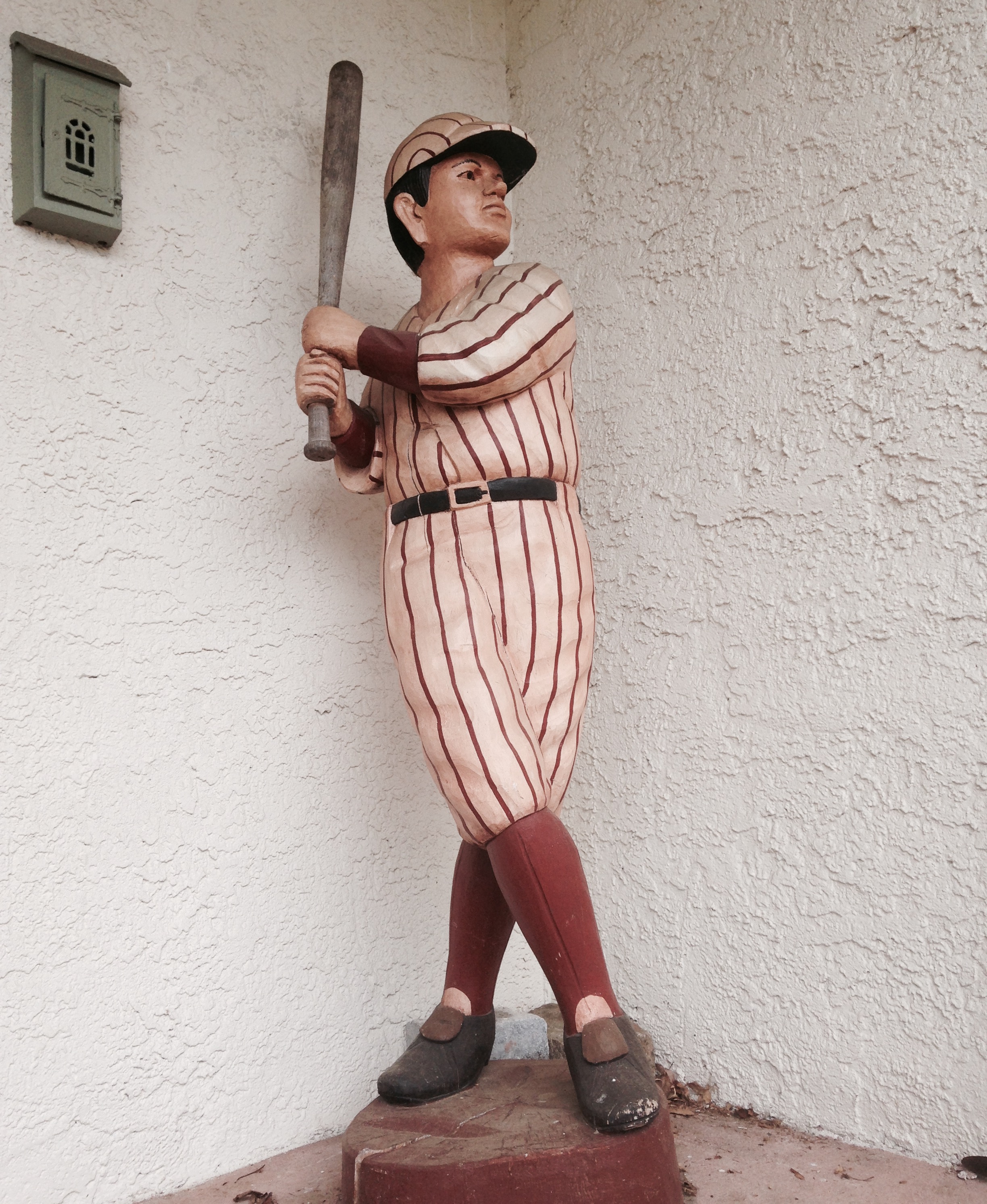
I may not have mentioned that there’s convocation of wasps who’ve found a lovely home burrowing into the wooden Babe Ruth sculpture on my porch. Okay, fine, the idea of the Babe being buzzed is amusing but do stop, save it for another time. That’s not the direction I’m going in today.

They fly in and out, no fancy compass needed. I could have them flushed out but really why? They’re industrious and self-sufficient which is kind of a pleasure to be near. And besides, they’re just visiting. I’m told that after this season they’ll abandon this spot and find another place entirely. So I just watch them. As long as I don’t thoughtlessly block the opening to their home with grocery bags they just watch me as well.

This week those good people at The American Museum of Natural History were sharp enough to note and highlight birthday of E.B. White, author of many wonderful things both for adults and children, but who is particularly celebrated for Charlotte’s Web. I don’t know if all creatures would go to the lengths of unexpected friendship and lasting kindness that Charlotte did for her friend Wilber, but in a summery, dreamy state I’d like to think so.

But then there’s that pull. My compass points me back inside to the piles of clothes, the stacks of work, and the unopened correspondence. Grudgingly I turn with the dial.

And like my summer tenants, the inspiringly industrious wasp colony who’ve chosen to be proudly housed in a monument to one of baseball’s great icons, I start buzzing.

It’s not so bad. In cleaning I discover books and toys and gewgaws that make pleasant memories come rushing back. Ignoring the paperwork relaxes me enough that work ideas trickle and then finally flow. At last I dig through the correspondence.

Clicking clicking clicking, blearily numbed by ad after ad for CVS for Sears for Amazon for L.L. Bean, there was for me, a short and sweet note.

It was sent only to say hello. It was sent only to say that someone remembered something good that happened that I’d long forgotten. It was sent only to say thank you for something where no thanks was due. It was sent so I might hear what I needed to hear when I least expected to hear it.

Maybe this was what my compass was pointing me to all along.

It’s interesting fact. In so many places, in so many ways, we’re urged to be kind. This is a good thing. I think most of us take that encouragement to heart, to make it part of who we are and what we do.

But then too, it’s just as important to know, to feel and to really believe, that kindness will happen to each us when we need it most. Try not to be impatient.

There are Charlottes everywhere it seems.

Happy birthday, E.B. White.

***

“All that I ever hope to say in books, all that I ever hope to say, is that I love the world.” E.B. White

Short aside for baseball fans: although of course, the Babe wore Yankee pinstripes for his glory years, he finished his career with the Boston Braves, hence the different uniform.

THE JOY OF LIBRARY ROULETTE

IMG_0517

I’ve fallen into a black hole not once, but many times. Those who care for me are happy I always return.   I emerge dazed and transformed, my whole self exploded and reconstructed and somehow shifted. I like to think I return indefinably better.

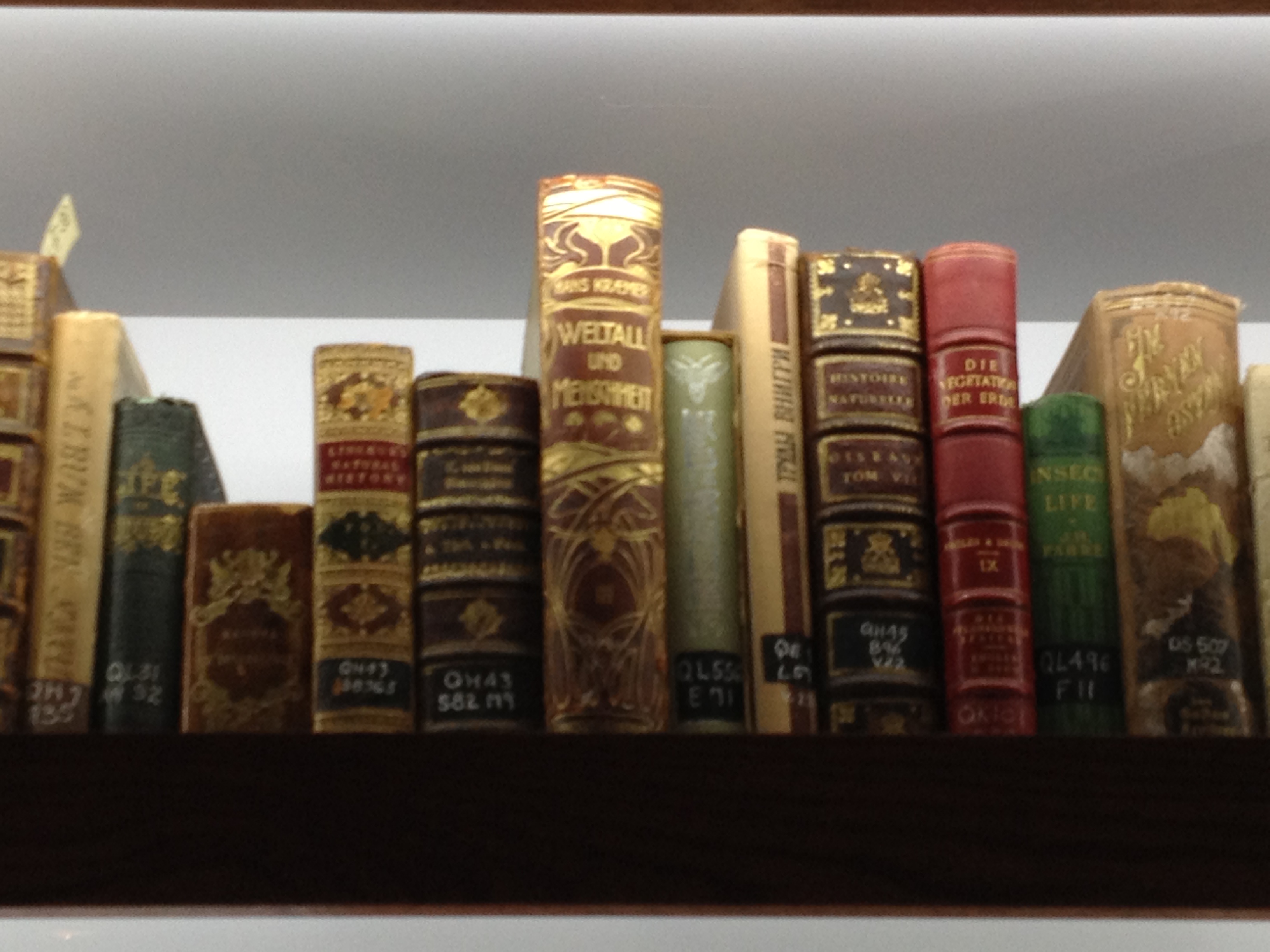
It happened again the other day. I was playing library roulette — arguably the best game ever. There are two ways to play: the original, comfortably wandering through the library shelves peering at spines in a completely unplanned and random way. If you play, make sure to look low at the bottom shelves and scurry up the ladders to the top when no one is looking until some odd and wonderful and unexpected little book almost literally jumps out at you. Or there’s the more modern version: finding a hint in something you’re reading and tracking it down via cyberspace. If you’ve played, and I’m betting almost all of you have, you know that both versions can swirl you instantly into the most delicious black hole. This time I was playing the cyber version of the game. My reward was a tiny, and virtually forgotten little volume called The Spring of Joy by an author I’d never heard of named Mary Webb.

The book has been out of print for a long time. But The Spring of Joy, all hundred odd pages of it, was a cherished bestseller in its day, and upon her death in 1927 Mary Webb was lauded by no less than the Prime Minister of Britain as a “neglected genius“. An exquisitely evocative meditation on the beauty and rhythms of nature and the healing powers of observation, The Spring of Joy is truly one of the loveliest books I’ve ever read.

But wait. A book such as this out of print? A once lionized author marginalized and virtually forgotten? Both facts should be deeply sobering, terribly sad. Except that I think that’s not quite so. Nor is it the whole story.

There are as many reasons for creating art as there are artists: A deep-seated need for observation and expression. A hope to touch other lives. Self-validation by way of fame. A quest for immortality. A wish to become rich (this is not to be sneered at. Writers do need to eat).  Sometimes a mix of all of these things and more. The most public forms of expression are done for the most personal of reasons.

But while writers can control what they write, the cannot, no matter how hard they try, control the response to their work. Anything can happen. Anything usually does.

And so…

*You might be the most widely read, most celebrated author of your time—then forgotten, even vilified, thereafter.

*You might labor in near total obscurity in your lifetime and be posthumously crowned as the “voice of a generation” sometime in the future.

*You might be discovered, quite unexpectedly, on a library shelf or in a wildly spiraling Internet search.

*You might labor for decades to reach a tiny but dedicated readership.

*You might have no readers at all, save for yourself.

It doesn’t matter.

Writing, and the thought and feeling that motivate writing, are always worthwhile. You might reach millions or you might change the world for a single person, even if that person is you.

Whatever it is, write. Be brave. Be honest. Be true to yourself.  And always play library roulette. I guarantee you will uncover shining jewels and buried treasures. Mary Webb’s The Spring of Joy such a book for me. You knew that. If you’re quite lucky, the treasure someone will uncover someday will be one of your own creations. You might change the world or the world for just one person.  Keep going. You’ll make a difference for sure.

PS, if you’re interested in reading The Spring of Joy  it’s available on line as many out-of-print titles are via the Digital Library at The University of Pennsylvania. Click below or simply Google it.    http://digital.library.upenn.edu/women/webb/spring/spring.html

A TINY DOT OF HONEY

FullSizeRender (1)

This past April Fools’ Day Google infused the mundane with sheer joy by turning Google Maps into a gigantic game of Pac- Man. This was especially fun for someone like me who once upon a time spent way too many rolls of quarters racking up points in the arcades of yore. Think of it! You could play anywhere in the world but I loved playing Pac-Man by eating up Manhattan dot by dot: up Fifth Avenue, across 59th skimming the Park, zoom around Columbus Circle and finally cut down Broadway, avoiding the ghosts with a few celebratory stops for bunches of cherries.

It was hugely fun. Besides. I was still good.

But I was thinking about it. With all the masses of people who jam Times Square and Central Park, Greenwich Village and the Upper East Side, South Street Seaport and SoHo, each of us is really on our own self-appointed little Pac-Man journey from the coffee place to the office to drinks to home to bed. We travel alone but together make up the vast, milling and slightly terrifying hive.  Each of us looks out and there is always that throng, pulsing and faceless and sometimes judgmental of anyone or anything that seems a bit out of the norm.  Most of us just put our heads down nervously and continue gobbling the dots lest we be singled out next. Will we be judged? Will anyone out there be kind to us if we need it? Will we always be alone?

In some ways, that fear of being judged or abused because one is a little different has always been the case. I’ve been reading A Traveller in Little Things by W.H. Hudson published in 1923. The book, —all Hudson’s observational writing, in fact—is soft and lyrical, his insights sharp. Hudson, who traveled the English countryside, was a keen observer of everything from birds to human nature, one of the lucky ones possessed of the ability to see and appreciate what often eludes most of us. He was an unusual man, one who chose a very different path.

One evening Hudson found himself in the presence of a wealthy and powerful businessman. This self-centered and condescending boor spent the evening pompously holding court, belittling Hudson’s opinions, completely incurious about his accomplishments. Finally, without provocation, the businessman cut Hudson to the quick by referring to him as a mere “Traveller in Little Things”, in other words, a man not worth much consideration at all. Hudson didn’t respond then although he felt the rebuff intensely. Instead he harnessed the slight as the title for his newest book and wrote the story in the first chapter. Not a vicious revenge, for someone who was attacked for merely being different perhaps, but a sweet one.

As usual, I bounce from one thing to another. Stay with me though. Let’s bring the story home.

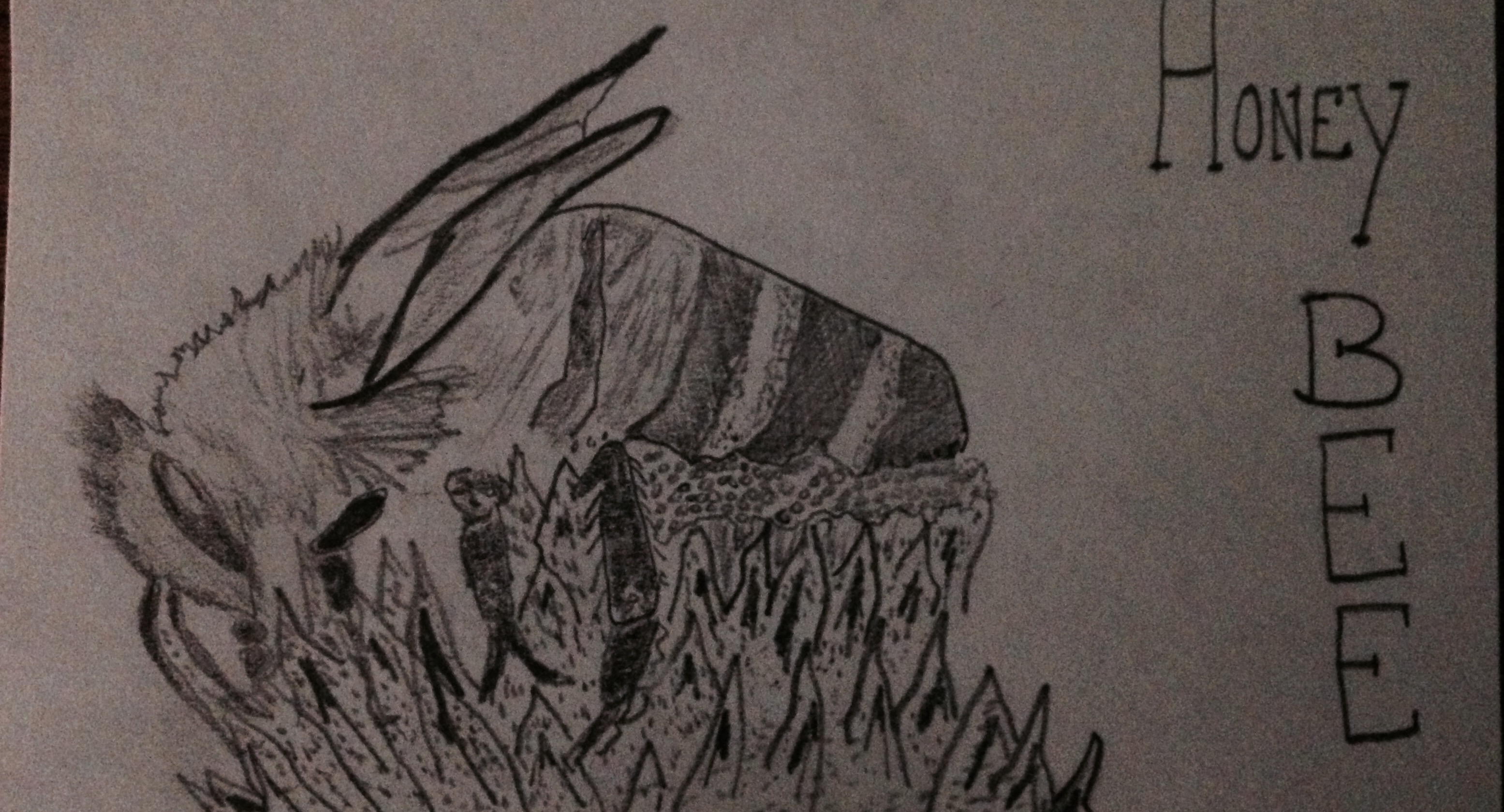
We spotted a bee in the house the other day. Most people are alarmed when they see bees but not us. We’ve learned to react but not overreact. We are proud of this. So I was able to scoop the little thing up in a tissue and bring it outside. Really you can’t go through life always being afraid of stingers.

We laid the tiny creature down gently on the porch. She still had golden beads of pollen attached to her flank and legs. The bee trembled slightly but then didn’t move at all. I thought she was gone. My son, who knows about these kinds of things, asked if we had any honey inside. Of course we did.

He spread a tiny dot of honey near the bee then told us to watch closely and wait. At first nothing happened. And then it did. The bee’s tiny proboscis, what looked like its tongue, flitted in and out of the honey, giving it strength. Minutes passed. Then bee quivered for a moment, took a few wobbly steps forward, and spun up in the air, flying directly to the Dogwood tree. “Back to business for her now, “ said my son. “Directly back to work gathering pollen. She’ll head back to her hive after this.”

All it took was a little patience, a little sweetness to save her.

That’s really all it takes to help any of us industrious little Pac-Men and Women, isn’t it?