MY OWN “10-MINUTE UNIVERSITY”

IMG_3130

It was a brilliant concept. In the late 1980s Workman published 10-Minute University, a book and recording which purported to “teach” only the things you’d need to remember from a typical four-year university experience. Presented by the world’s fastest talking man, John Moschitta, Jr., TMU shrunk learning down to bite-sized nuggets on topics from comparative literature to physics to football.  It was hilarious. What I didn’t realize until now was that it was also sort of true. And I wondered, what did I actually remember about college? What did I learn?

Life, being what it is, keeps most of our heads clogged with the demands of the present. But the past is always there for us, patiently waiting to be remembered, reconsidered, and sometimes redefined.

1.

My head bounces first to Pinball Pete’s. I walk through a nondescript door into a darkened room. It’s spangled with flashing lights and jangled with the clash of tinny music. I feed two single dollar bills into the coin changer for my daily quota of eight quarters. For a little while, or maybe longer if it’s a good day, I am the Frogger Queen, the Pac Man Champ. When I leave I wrap my arms around my books but I feel so great I wish I could just balance them on my head.

2.

I’ve staked out a seat for the evening, end of the row with a little extra elbowroom. I need it: I’m a lefty. The ceilings are high, the lights are low and the silence is thick. We are all in this together, chins jutted out determinedly, all hunched over our books. The competition for seats here in the Grad is intense-get up at your peril or your rail back chair will be forever lost, your books and papers summarily dumped like your laundry, left in the dryer for a mere ten minutes after the cycle completes. But at some point I risk it anyway-I always do–for the lure of the instant coffee machine, a quarter for a cup of viscous black sludge, the most intense caffeine hit on the planet.

3.

There I am, managing to curl up in a straight back booth at Drake’s. In front of me is a dented metal tray. It holds a grilled cinnamon roll and a tiny tin teapot filled with hot Russian Caravan. Sometimes there is instead a glass of limeade and a tuna sandwich, served on WonderBread and cut into perfect quarters. The penny candy wall is just across the way, glass jars filled with everything from nonpareils to malted milk balls, lemon drops to licorice. I am a licorice person. Bored looking girls wearing aqua-colored smock jackets plunge in with scoopers filling red and white striped bags to order. I never leave without one. Actually, I never want to leave.

4.

When I was a little kid we were taught that Henry Ford invented the automobile. Or maybe that was just implied. I’ve never been sure. This may have been a Detroit thing, people here care for their cars so deeply that they identify themselves not just by the cars they drive but by the cars they drove. I am still misty-eyed at the thought of my ’71 cream colored, black roofed Cutlass Supreme. At any rate, I was a grown up before I realized, or was willing to accept, that Henry Ford did not actually invent cars but he did pioneer mass production.

That connection may in fact be what led Tom Monahan, who then ran Dominos, to install a genius oven in his pizza places. That oven ran on the Ford mass production system theory: a call would come in, one of us would take the order, the slip would be instantly transferred to the tosser who threw the dough up the air and stretched it onto a tray, tucking the order slip underneath, where it would be sent down the line to the saucer person, who then moved the pie over to the cheeser person, who would shove the pie to me. My job was to instantly decipher the hieroglyphics on the slip and add the toppings, the worst being sausage because it was sticky, meaning that I’d have to dunk my hands in the olives to moisten them enough to get the sausage on the pie fast enough. Then one quick turn and the pie would be placed on a conveyer belt that carried it through a superhot oven in a handful of minutes.  It slid hot and done down a slide at the end, was folded directly into a waiting pizza box before being thrust into the arms of the delivery guy who drove like a bat out of hell to get it to someone’s front door. All in thirty minutes or less or it was free.

My college job. I was good at this.

5.

I lived on the third floor in East Quad, an old dorm covered in ivy. No air conditioning.   But open windows meant fresh air. And sometimes company.

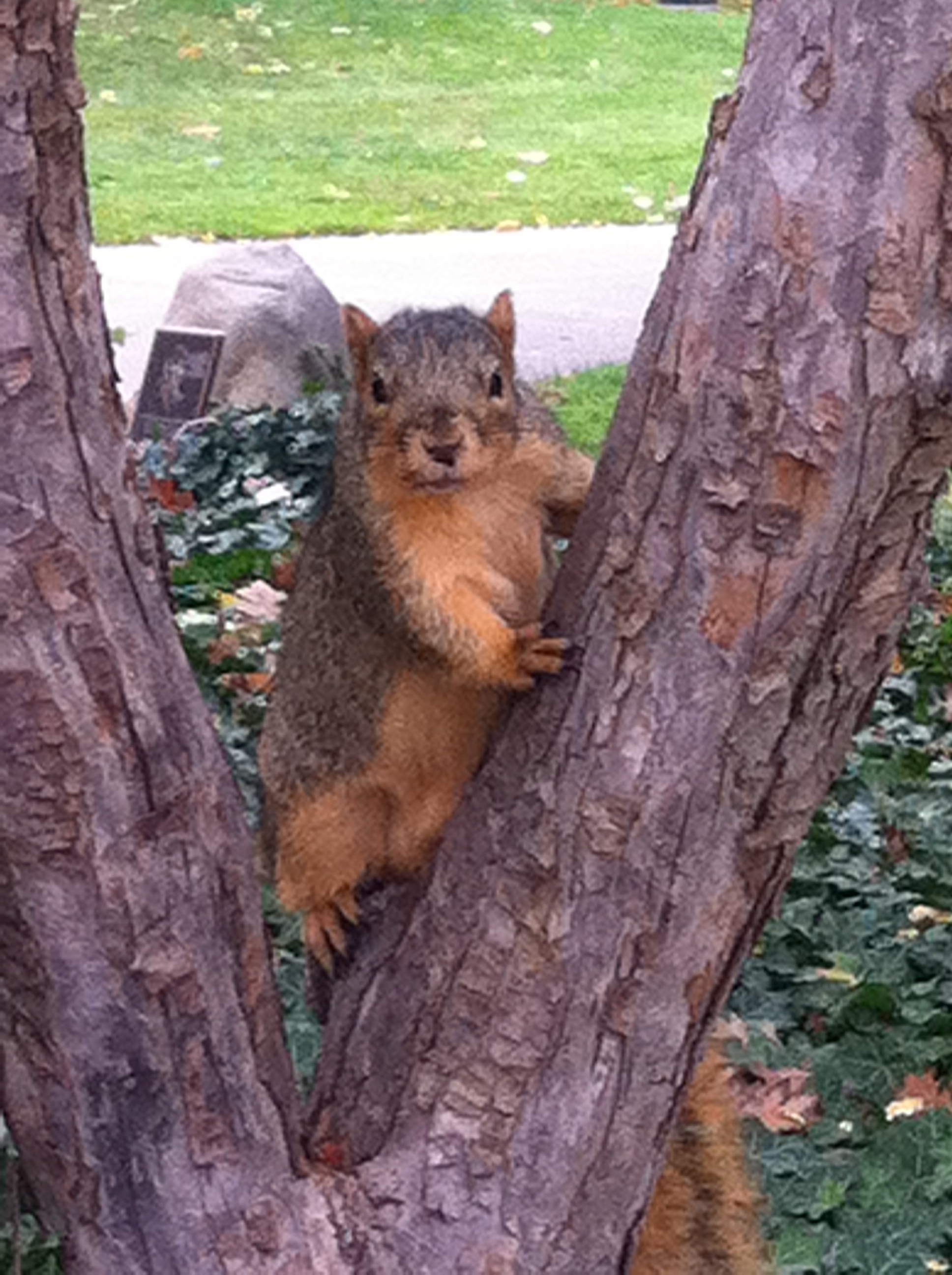
One day I looked out and there was a squirrel sitting on the ledge. He didn’t move. Neither did I. I waited. So did he. We sat in silence for a bit. Finally I gently reached over and placed a cracker on the ledge. He picked it up with both paws and ate the whole thing right there. After nibbling through a few more crackers he looked at me as if to say thanks then scampered away. I thought that was that. It wasn’t. Melvin (if he and I were going to be together like this, he needed a name) returned the next day and every day after that. It became clear that he preferred peanut butter spread on his crackers and he was also fond of raisins.

End of the semester and I hated to leave him. So I left a note for whomever would be taking over my room with detailed instructions to watch out for Melvin and to leave peanut butter crackers for him if possible. I hoped for the best.

***

So I think you’ll agree I learned a great deal in college. My own 10-Minute University takeaway is this:

I to this day I know how to enjoy my own company. I revel in eating well. Sometimes I move fast—other times less so—but I know how to keep the rhythms of my life moving forward. I can be patient when I have to be. I detest sausage, I love licorice, I adore coffee.

Oh. And almost thirty years later, on a visit to my old school with my husband and sons, the tour guide proudly mentioned the most popular club on campus: The University of Michigan Squirrel Club with over four thousand members.   Legend holds that the Squirrel Club, a group that meets on Sunday afternoons to feed peanuts to the squirrels of Ann Arbor, began in my dorm, East Quad, shortly after I left.

Photo credit: Jared R. Frank
CHARLOTTES EVERYWHERE

FullSizeRender (1)

Naturally the thing I love most about the iPhone is the most antiquated thing of all.

It’s the compass, that directional miracle. Turn it on wherever you are, spin and see exactly where you’re headed. Or headed away from. It’s a nonjudgmental GPS without a bossy, irritating voice. I used to play with compasses as a little kid but unlike Einstein, whose scientific genius was sparked as a four year old by the gift of a compass, I just marvel at them. But I haven’t turned mine on in a while.

I’m preoccupied. Piles of laundry, stacks of work, gluts of emails. The pleasure of seeing how high piles can be stacked is sometimes far more interesting than getting to the bottom of them. In sync with the frustration of world economists, roiled by the possible “Grexit” I was feeling completely Sisyphean. It was like being snarled in a web.

How odd that the woman who manages to spend the summer sweating indoors instead of being warmed by the sun should think so much about the natural world rather than be out in it. But sometimes nature is both generous and bold. Sometimes it comes right to one’s front door.

Literally in my case.

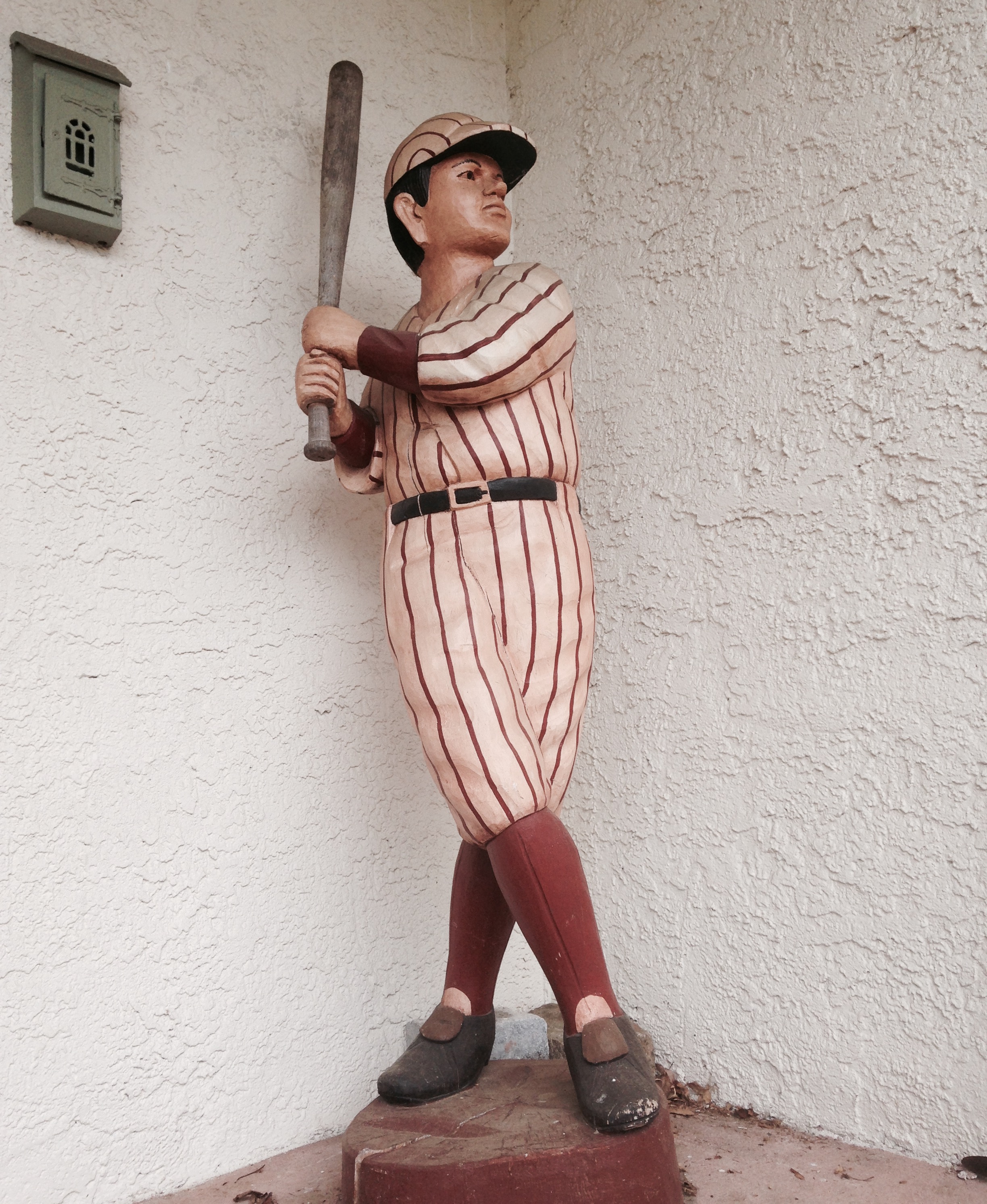
I may not have mentioned that there’s convocation of wasps who’ve found a lovely home burrowing into the wooden Babe Ruth sculpture on my porch. Okay, fine, the idea of the Babe being buzzed is amusing but do stop, save it for another time. That’s not the direction I’m going in today.

They fly in and out, no fancy compass needed. I could have them flushed out but really why? They’re industrious and self-sufficient which is kind of a pleasure to be near. And besides, they’re just visiting. I’m told that after this season they’ll abandon this spot and find another place entirely. So I just watch them. As long as I don’t thoughtlessly block the opening to their home with grocery bags they just watch me as well.

This week those good people at The American Museum of Natural History were sharp enough to note and highlight birthday of E.B. White, author of many wonderful things both for adults and children, but who is particularly celebrated for Charlotte’s Web. I don’t know if all creatures would go to the lengths of unexpected friendship and lasting kindness that Charlotte did for her friend Wilber, but in a summery, dreamy state I’d like to think so.

But then there’s that pull. My compass points me back inside to the piles of clothes, the stacks of work, and the unopened correspondence. Grudgingly I turn with the dial.

And like my summer tenants, the inspiringly industrious wasp colony who’ve chosen to be proudly housed in a monument to one of baseball’s great icons, I start buzzing.

It’s not so bad. In cleaning I discover books and toys and gewgaws that make pleasant memories come rushing back. Ignoring the paperwork relaxes me enough that work ideas trickle and then finally flow. At last I dig through the correspondence.

Clicking clicking clicking, blearily numbed by ad after ad for CVS for Sears for Amazon for L.L. Bean, there was for me, a short and sweet note.

It was sent only to say hello. It was sent only to say that someone remembered something good that happened that I’d long forgotten. It was sent only to say thank you for something where no thanks was due. It was sent so I might hear what I needed to hear when I least expected to hear it.

Maybe this was what my compass was pointing me to all along.

It’s interesting fact. In so many places, in so many ways, we’re urged to be kind. This is a good thing. I think most of us take that encouragement to heart, to make it part of who we are and what we do.

But then too, it’s just as important to know, to feel and to really believe, that kindness will happen to each us when we need it most. Try not to be impatient.

There are Charlottes everywhere it seems.

Happy birthday, E.B. White.

***

“All that I ever hope to say in books, all that I ever hope to say, is that I love the world.” E.B. White

Short aside for baseball fans: although of course, the Babe wore Yankee pinstripes for his glory years, he finished his career with the Boston Braves, hence the different uniform.

THE JOY OF LIBRARY ROULETTE

IMG_0517

I’ve fallen into a black hole not once, but many times. Those who care for me are happy I always return.   I emerge dazed and transformed, my whole self exploded and reconstructed and somehow shifted. I like to think I return indefinably better.

It happened again the other day. I was playing library roulette — arguably the best game ever. There are two ways to play: the original, comfortably wandering through the library shelves peering at spines in a completely unplanned and random way. If you play, make sure to look low at the bottom shelves and scurry up the ladders to the top when no one is looking until some odd and wonderful and unexpected little book almost literally jumps out at you. Or there’s the more modern version: finding a hint in something you’re reading and tracking it down via cyberspace. If you’ve played, and I’m betting almost all of you have, you know that both versions can swirl you instantly into the most delicious black hole. This time I was playing the cyber version of the game. My reward was a tiny, and virtually forgotten little volume called The Spring of Joy by an author I’d never heard of named Mary Webb.

The book has been out of print for a long time. But The Spring of Joy, all hundred odd pages of it, was a cherished bestseller in its day, and upon her death in 1927 Mary Webb was lauded by no less than the Prime Minister of Britain as a “neglected genius“. An exquisitely evocative meditation on the beauty and rhythms of nature and the healing powers of observation, The Spring of Joy is truly one of the loveliest books I’ve ever read.

But wait. A book such as this out of print? A once lionized author marginalized and virtually forgotten? Both facts should be deeply sobering, terribly sad. Except that I think that’s not quite so. Nor is it the whole story.

There are as many reasons for creating art as there are artists: A deep-seated need for observation and expression. A hope to touch other lives. Self-validation by way of fame. A quest for immortality. A wish to become rich (this is not to be sneered at. Writers do need to eat).  Sometimes a mix of all of these things and more. The most public forms of expression are done for the most personal of reasons.

But while writers can control what they write, the cannot, no matter how hard they try, control the response to their work. Anything can happen. Anything usually does.

And so…

*You might be the most widely read, most celebrated author of your time—then forgotten, even vilified, thereafter.

*You might labor in near total obscurity in your lifetime and be posthumously crowned as the “voice of a generation” sometime in the future.

*You might be discovered, quite unexpectedly, on a library shelf or in a wildly spiraling Internet search.

*You might labor for decades to reach a tiny but dedicated readership.

*You might have no readers at all, save for yourself.

It doesn’t matter.

Writing, and the thought and feeling that motivate writing, are always worthwhile. You might reach millions or you might change the world for a single person, even if that person is you.

Whatever it is, write. Be brave. Be honest. Be true to yourself.  And always play library roulette. I guarantee you will uncover shining jewels and buried treasures. Mary Webb’s The Spring of Joy such a book for me. You knew that. If you’re quite lucky, the treasure someone will uncover someday will be one of your own creations. You might change the world or the world for just one person.  Keep going. You’ll make a difference for sure.

PS, if you’re interested in reading The Spring of Joy  it’s available on line as many out-of-print titles are via the Digital Library at The University of Pennsylvania. Click below or simply Google it.    http://digital.library.upenn.edu/women/webb/spring/spring.html

A TINY DOT OF HONEY

FullSizeRender (1)

This past April Fools’ Day Google infused the mundane with sheer joy by turning Google Maps into a gigantic game of Pac- Man. This was especially fun for someone like me who once upon a time spent way too many rolls of quarters racking up points in the arcades of yore. Think of it! You could play anywhere in the world but I loved playing Pac-Man by eating up Manhattan dot by dot: up Fifth Avenue, across 59th skimming the Park, zoom around Columbus Circle and finally cut down Broadway, avoiding the ghosts with a few celebratory stops for bunches of cherries.

It was hugely fun. Besides. I was still good.

But I was thinking about it. With all the masses of people who jam Times Square and Central Park, Greenwich Village and the Upper East Side, South Street Seaport and SoHo, each of us is really on our own self-appointed little Pac-Man journey from the coffee place to the office to drinks to home to bed. We travel alone but together make up the vast, milling and slightly terrifying hive.  Each of us looks out and there is always that throng, pulsing and faceless and sometimes judgmental of anyone or anything that seems a bit out of the norm.  Most of us just put our heads down nervously and continue gobbling the dots lest we be singled out next. Will we be judged? Will anyone out there be kind to us if we need it? Will we always be alone?

In some ways, that fear of being judged or abused because one is a little different has always been the case. I’ve been reading A Traveller in Little Things by W.H. Hudson published in 1923. The book, —all Hudson’s observational writing, in fact—is soft and lyrical, his insights sharp. Hudson, who traveled the English countryside, was a keen observer of everything from birds to human nature, one of the lucky ones possessed of the ability to see and appreciate what often eludes most of us. He was an unusual man, one who chose a very different path.

One evening Hudson found himself in the presence of a wealthy and powerful businessman. This self-centered and condescending boor spent the evening pompously holding court, belittling Hudson’s opinions, completely incurious about his accomplishments. Finally, without provocation, the businessman cut Hudson to the quick by referring to him as a mere “Traveller in Little Things”, in other words, a man not worth much consideration at all. Hudson didn’t respond then although he felt the rebuff intensely. Instead he harnessed the slight as the title for his newest book and wrote the story in the first chapter. Not a vicious revenge, for someone who was attacked for merely being different perhaps, but a sweet one.

As usual, I bounce from one thing to another. Stay with me though. Let’s bring the story home.

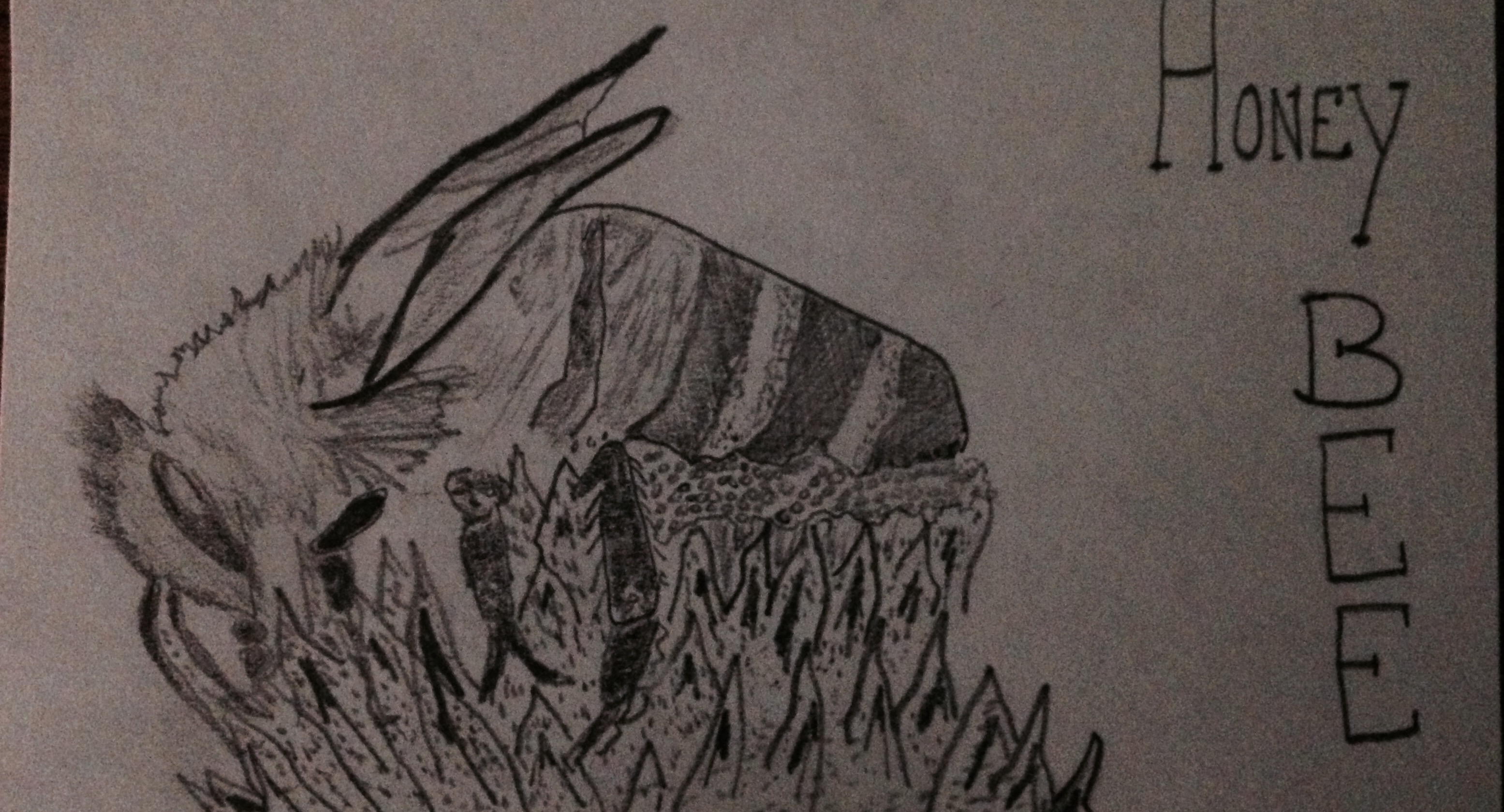
We spotted a bee in the house the other day. Most people are alarmed when they see bees but not us. We’ve learned to react but not overreact. We are proud of this. So I was able to scoop the little thing up in a tissue and bring it outside. Really you can’t go through life always being afraid of stingers.

We laid the tiny creature down gently on the porch. She still had golden beads of pollen attached to her flank and legs. The bee trembled slightly but then didn’t move at all. I thought she was gone. My son, who knows about these kinds of things, asked if we had any honey inside. Of course we did.

He spread a tiny dot of honey near the bee then told us to watch closely and wait. At first nothing happened. And then it did. The bee’s tiny proboscis, what looked like its tongue, flitted in and out of the honey, giving it strength. Minutes passed. Then bee quivered for a moment, took a few wobbly steps forward, and spun up in the air, flying directly to the Dogwood tree. “Back to business for her now, “ said my son. “Directly back to work gathering pollen. She’ll head back to her hive after this.”

All it took was a little patience, a little sweetness to save her.

That’s really all it takes to help any of us industrious little Pac-Men and Women, isn’t it?

THE MANY MADELEINES OF BROOKLYN

FullSizeRender (1)

The astounding thing, now that I think about it, is that I actually found myself someplace cool. At least I’m pretty sure it was cool. On a sunny Spring afternoon on Pier 5 in Brooklyn Bridge Park, I descended into one of the Smorgasburgs, about a hundred popup booths selling incredibly wild and creative foods: booze and bakery mashups, beet ketchups, macarons, salt water taffy, schnitzel and chilis. “Ice cream” that’s made without either ice or cream and called “a potion”. Wings and doughnuts. Duck burgers, chickpea burgers, ramen burgers. Fries, fries, fries. And that’s just for appetizers. There wasn’t even a trace of my old Brooklyn, a sleepy and at the same time slightly dangerous place filled with Ioaves of Cammareri’s Italian bread and plastic takeout containers of chicken and broccoli from Me and My Egg Roll.

It was so crowded you could have picked both feet off the ground and still be swept along. Even the air had an especially delicious taste when you breathed in. Thousands of bow-tied and elegantly scarved people, some pushing strollers but all expertly coiffed, knew all the right lines to stand in. The drone of a thousand conversations provided a buzzy background to an exultant melody of sips and chews. All in all, there was the throbbing and happy sound of everyone eating everything. The best and most amazing food ever. Everyone there was sure of it.

Eating is, and always has been, one of the things I do best. But wrapped securely in my trench coat and looking a little like an old movie spy, I felt small and nervous and scared. This was new Brooklyn and although this was a place where I’d felt deeply comfortable and at home, I’d been gone for a long time. I flitted from booth to booth feeling standoffish and uncomfortable. Worst of all, I didn’t feel hungry.

“Tell me what you eat,” said Brillat-Savarin, “and I’ll tell you what you are.” If that quote reflected everyone at Smorgasburg all I could think of were unholy messes of food and thought: towering Dagwood sandwiches and this weird “all you can eat” cafeteria at Cedar Point where you were given a tiny plate the size of a saucer and allowed to go through the line only once. Desserts were conveniently the first offering and then squished in at the bottom beneath layers of lasagna and cole slaw and meatballs and fruited jello. Truly an archeological dig of a dinner.

But really, the reflection isn’t fair.

No one writes like Proust but Proust but of course we all have our own personal madeleines. For some of us it’s a hot sesame seed bagel or a Toasted Almond Good Humor, for others it’s a squashed Milky Way or a bakery sprinkle cookie. Sometimes it’s a crisp Macintosh apple or a mystery drowning in brown sauce, a white carton of Egg Foo Yung.

Suddenly it made sense.  A ramen burger would be someday be someone else’s madeleine just as surely as Cammareri Bakery Italian loaves are one of mine. More importantly, I know I can try a ramen burger anytime should I ever be in the mood. It’s never too late to make new madeleine memories.

Although it’s the previous quote from Brillat-Savarin that’s better known, what follows is the one I love best:

“However, I have lived long enough to know that each generation says the same thing and is inevitably laughed at by the men who live in the next one.”

The Smorgasburg people, the new Brooklynites, weren’t actually laughing at me or at anyone else. They were eating. And while the foods and tastes were different from my time to theirs, the savoring and the excitement are just the same. So is the appreciation for what’s different and delightful and truly memorable. We are more alike than it seems.

Brillat-Savarin was not actually talking about food in the last quote. But then, of course, neither am I.

A Tiny Mystery

FullSizeRender (1)

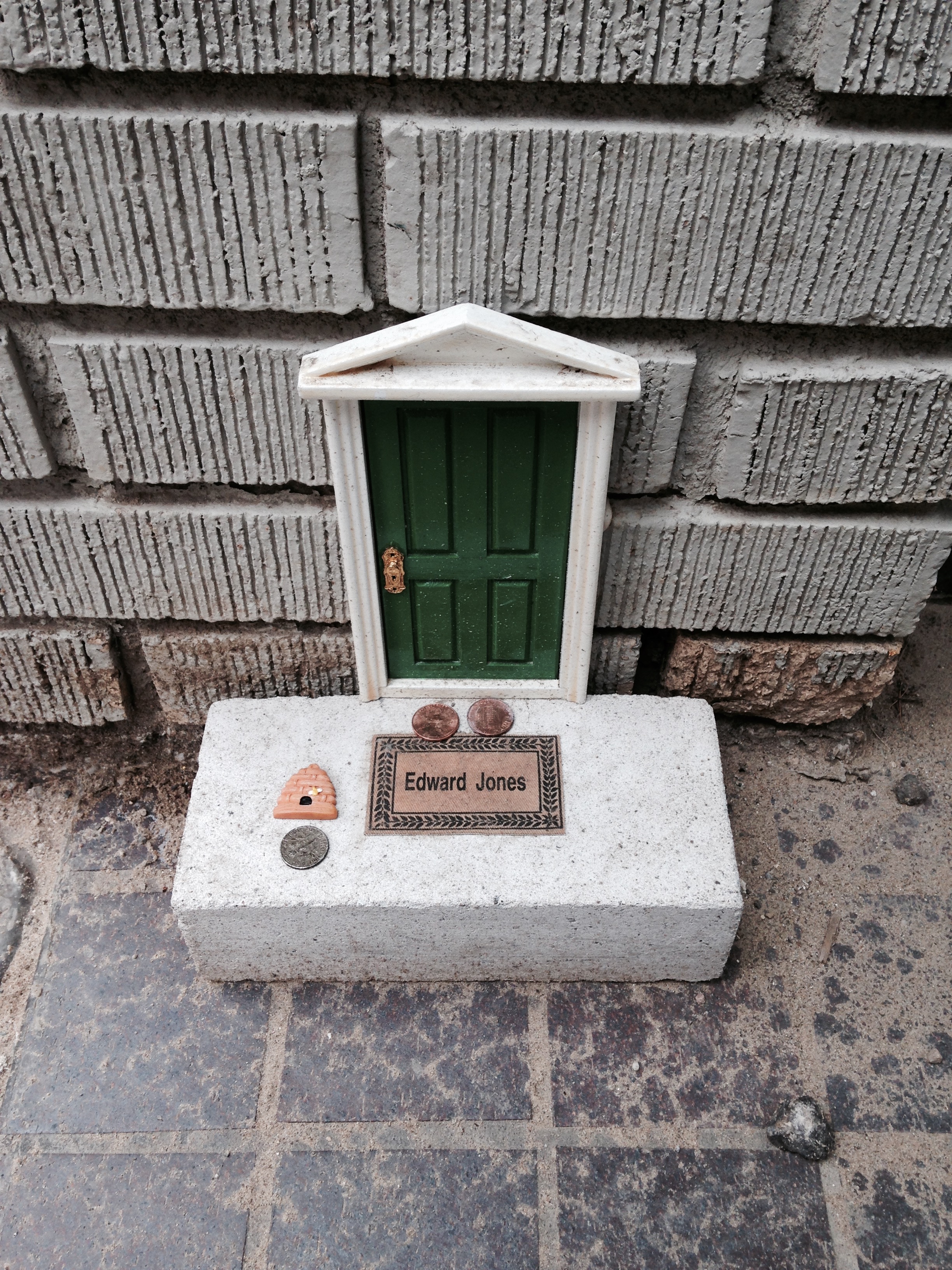
By nature I’m a rusher though I wish this wasn’t so.   But lately I’ve found myself slowing down just a bit, maybe just enough. And that’s when I saw it. A tiny little door placed right in façade of a building. If I’d been rushing I would have missed it completely. But I didn’t.

Why was it there? Who crafted it so perfectly? Were there more, are there more? Who else knows the secret?  What deeper meaning was there that somehow I couldn’t fathom at all? “Oh,” said one of my sons matter-of- factly, “that’s a Fairy Door.”

It was in the middle of a hard jumble of a week. Tight schedules and packing bags, unexpected sickness and brave struggles towards renewed vigor, bittersweet endings and thrilling glimmers of new beginnings, hundreds and hundreds of miles logged on Route 80 dodging truck traffic. Burger King, Burger Fi, Blimpy Burger.

I caught up to everyone else and we continued on. Endless mugs of coffee and platters of Hippie Hash. (If you’ve never tried this you should. Look it up.)

On the way back I found the tiny door again.   I loved how perfectly it was made. I loved that it was there. I was about to do what I always do—do the research, search for answers, learn the history: the whys the wherefores the hows. I always want to put everything together safely in a box, seal it up and feel that I am done.  But I couldn’t do it. Not this time. Instead I found myself reaching into my pocket.

There is always something there. Acorn tops, lucky coins, fortune cookie fortunes, little drawings, bottle caps and the occasional pink ring of power. It’s more likely that I’d leave my wallet at home than any of these admittedly odd talismans. Each holds a special meaning and memory. I fingered a small plastic beehive and a lucky dime I’d found on the sidewalk and placed them at the foot of the tiny door. One last look and I walked away.

There’s a key scene in the movie Harold and Maude. Sitting before a lake late in the evening Harold gives his beloved Maude something very unexpected and very precious. Giving her this small token was intensely hard for him to do. Maude is deeply moved and says she loves it…then she flings the gift into the center of the lake. Harold is appalled until Maude turns to him sweetly and says, “and now I’ll always know exactly where it is.”

Maybe sometimes we need a little mystery instead of answers.  Maybe sometimes it’s just enough to wonder, to dream, to hope. But it’s good  to know that hiding around any corner there might be something precious, or something thought lost is really quite safe in the middle of the lake.

MARTHA, CONNIE AND VET; BESS, ANN AND ROSE

FullSizeRender (1)

It was the craziest thing. I found them on YouTube. Of all places.

Listening to the Mills Brothers on YouTube that day was for me, truly little blip of joy. The music was delightful, but what I clicked next was really divine.

The Boswell Sisters singing Crazy People. I had never heard of the singers or the song. But I haven’t been the same since that moment. Here they are (left to right) Connie, Vet and Martha, The Boswell Sisters of New Orleans:

http://youtu.be/ynwtYRDP124

That was two and half minutes of sheer joy that was both buoyant and almost symphonic in it’s precision and complexity.

How do you define something extraordinary? Should you even try? When something is right and good and true, the real thing, be it a painting, a novel or the love of your life you just know. You just feel it.

Lover of harmonic singing…or not. Lover of jazz innovation…or not. Lover of musical stylings of the 20s and 30s…or not. There are simply some artists—Judy Garland, Eric Clapton, Django Reinhart, you’ve got your own favorites I’m certain- who demand your attention, whose immense talent and sheer artistry can’t be denied. They just ARE. The Boswell Sisters.

A quick round up: The Boswells were musical innovators, arrangers extraordinaire, and the finest close harmony singers of all time. The three Boswells-Martha, Connie and Vet, created an almost otherworldly sound I’d waited a lifetime to hear. I’d love for you to think I am the only one with such exquisite taste but far from it. The Boswells were the most popular singers in the country and attained worldwide fame for five frenetic years until 1936 when all three sisters married and the group abruptly disbanded. They were feted and beloved by everyone from Prince Albert of England (later George VI who insisted on slipping into every single one of their 1933 performances at London’s famed Palladium) to a young vaudevillian named Bob Hope who said to have intoned, “they were the best act I ever followed”. Ella Fitzgerald said the only singer who ever influenced her was Connie Boswell. The Andrew Sisters, who ascended only after the Boswells stopped performing, began as unabashed Boswell imitators, so much so the Minnesota natives originally sang with a southern drawl, according to Maxene Andrews.

And that was it.

They were there, top act in the country and just as suddenly not. All three sisters married, Martha and Vet immediately retired. Connie went on to a respectable solo career.   Save for a single unplanned on stage reunion about 20 years later, they never performed together again. At least in public. There’s a mystery here, of course, a real one worth savoring, but I’ll save that for later.

But for all that, it was an actually a throw away line that knocked me to my knees.

“You know,” my mother said, “I listen to the Boswells and I can just see your grandmother dancing to the radio. “ My lithe and beautiful Little Gram, the dancer in the middle between her different, but equally talented sisters Bess and Rose. My own family’s mercurial and linked threesome.

That was it then.

It was said once of the Boswells “They together clicked like a Geiger counter in a mine.” Such was the power of the unspoken rhythms and pulse of the three sisters. My grandmother and my great aunts didn’t sing but their lives together were complex and woven together as the Boswells.

They all lived all together in one house: my aunts. my great grandmother, and two sons upstairs, My grandmother and grandfather and three children below. My Aunt Bess was a seamstress of such self-taught skill that it was said that she could glimpse the latest styles through shop windows, then return home and recreate each intricate style stitch by stitch. Her marriage to a handsome but itinerate man was somehow broken—he was absent always, it was never spoken of. She remained behind, raising two sons, cooking and cleaning and helping to care for them and for her aged mother. Brilliant and bookish Rose gave up dreams of school and marriage to work in an office to help support them. My tiny and quietly vivacious grandmother married her childhood sweetheart—they had three children. My dashing grandfather dreamed of starting anew and apart, bringing my grandmother and their children everywhere from gritty Pittsburgh to sunny California in attempts at a new beginnings. But try as he might to escape they were always pulled back to the crowded house in Detroit. The sisters needed to be together. The sisters needed to be apart.

In thinking back, I don’t know who was happy and who was not. I don’t know what was fair and what was not. I don’t know, if things had been different, what might have been.

But at the core, my grandmother and my great Aunts were three sisters who cared for each other truly and deeply. They too were a trio.

And so to the mystery. What happened to the Boswells after they all married in a flurry ending effectively bringing to an end the Boswell Sisters in 1936?

Here’s the short answer,

Cynthia C. Lucas, as passionate and knowledgeable about the Boswells and their music as anyone in the world, once, told me to listen to Connie Boswell singing George and Ira Gershwin’s “They Can’t Take That Away From Me. “  http://youtu.be/9fLuoUBdKnw

And there it was. Connie Boswell, now a soloist, a woman who lived to perform, begins this slow, reflective and almost mournfully lovely rendition by humming the opening bars of “Shout, Sister, Shout” the Boswell theme song for their radio show.   The shout in this case is a whisper, but there it was, a message of heartfelt longing to her sisters.

***

But sometimes the end is the beginning. The Divine Miss M, Bette Midler, has anchored her latest album, “IT’S THE GIRLS!” with a spot on cover of the 1931 Boswell hit of the same name A super cool rock guy Steely Dan’s Donald Fagen begins his new book “EMINENT HIPSTERS” with an in depth chapter on one of his earliest musical loves and influences: The Boswell Sisters. Vince Giordano and the Nighthawks have the world jamming to jazz standards of the 20s and 30s, including the Boswells, through their performances on HBOs Boardwalk Empire and packs ‘em into NYCs Iguana twice weekly. Will Friedwald, one of the most highly regarded and knowledgeable Jazz writers in the country writes in The Wall Street Journal (Oct. 2014) of the Boswells: “They did for group harmony what Bing Crosby did for popular singing and Louis Armstrong did for Jazz improvisation.”  Dan Garrison of Joshua Tree Productions, and one of the finest writer/historians around, readies a PBS documentary on the Boswells, CLOSE HARMONY.

And last by no means least, Vet’s own granddaughter the amazing Kyla Titus, pens the just published THE BOSWELL LEGACY the definitive biography of the sisters revealing the roots of early jazz lore while exploring hidden history of her illustrious family. The true exploration of the mystery is here. A compelling, tour de force, the book swirls the reader into the inner world of the sisters and resonates. The book simply rocks. And rolls. And we all know what it means when finally; at last, bow ties are cool.

All this and long overdue applause to the chorus who’ve been studying and championing the Boswells for eons: James Von Schilling, professor and author of an early essay on the Boswells Hearing the Boswell Sisters (Popular Music and Society), the lovely and talented Jan Shapiro, chair of the voice department at Berklee College of Music, early champion of the Boswell sound revival, the brilliant Cynthia C. Lucas, the brains and heart behind http://www.Bozzies.com a immense source of information on the Sisters, Jazz historian and researcher David McCain, close friend of Vet Boswell’s and one of the sweetest men on the planet.

We can’t relive the lives of the Boswells nor can we relive the lives of my grandmother and great aunts. But we can look back lovingly, with a bit of an ache, and try to understand. And always, to listen.

This is dedicated with love then, to Martha, Connie and Vet, To Bess, Ann and Rose. With a hug of course, to my own two sisters, my own trio, Lisa and Shari.

Yowza.

For more information on the Boswells, or to purchase copies of Kyla Titus’ excellent THE BOSWELL LEGACY, please go to www.theboswellsisters.com

Or

Check for further information at www.bozzies.com

FOOD DREAMS

IMG_0131

In my dreams I can flip pancakes onto a platter with one hand while zip cracking eggs onto a sizzling griddle with the other. Toast pops into midair and is covered with jam before it hits the plate. Piles of burgers are stacked up high and sigh into their buns. I spin, pivot, staccato two-step and then arc a perfect stream of hot coffee into half a dozen waiting cups. There isn’t even a spot on my clean white apron.

I sometimes think I would cook like this if I could. But I can’t.

So instead I slow down. I pour a glass of wine, I turn up Radio Dismuke. I chop and I knead and I stir to a far more sedate beat.  Here it is.

*A handful of Raisinettes melting in one hand and a fistful of Tam Tam Crackers crumbling in the other. The dancing lady and the dancing man statues are poised on the buffet. The big cousins are jumping on the furniture, hiding under the table, they are everywhere all at once but they are still watching out for me. My first treats in the dining room at my grandmother’s house on Northlawn.

*Platters of brisket and corned beef and pastrami, trays of roast chicken, and sliced turkey and beef tongue. Mustard and coleslaw and pickles and rye. One tiny, lukewarm bowl of Birdseye mixed vegetables. My grandfather holds court from his armchair and knocks back a tumbler of buttermilk as he nibbles the core of the iceberg lettuce that was saved just for him. While he’s occupied, my grandmother silently beckons my sisters and me to the kitchen. She gives us Faygo Red Pop to drink right from the bottle. A disliked, discarded creamsicle melting on a plate is instantly replaced by an icy fresh Eskimo Pie. A tin of Mandelbrot is pressed into our hands. A tunnel of elm trees shades the way home. Sunday dinner at Grandma and Poppa’s on Lauder.

*It was the most amazing thing in the world. Drop in a nickel and a small brown container of chocolate milk tumbled into the slot. It worked every time. Except for that one time it didn’t. Somebody turned the dial and a container of white milk came out instead. I couldn’t figure out who would ever want to drink white milk when you could get chocolate. It was the worst. I drank it anyway. I had to. Everyone drank his or her milk because that was the rule at Francis Scott Key Elementary School.

*Three crisp one-dollar bills. Every Saturday afternoon. Tracy and me. Grilled cheese for her and tuna for me sitting at the Kresge’s Lunch counter. We drank Vernors served in paper cones that were nestled in silver holders. You could blow the paper off the straw if no one was looking. Then a walk all by ourselves around Birmingham. We each had 50 cents left to spend. So many choices but we still always chose the same.  A tiny bag of pistachios for her. A tiny bag of jellybeans for me. Every single Saturday.

*The lines snaked in and around the Continental Market. In the doors and out again. Such a miniscule little shop. It was right next to the place where they sold clogs. And near the other place they sold scented candles. Olga’s Souvlakis. Hot sliced lamb with yogurt, onion and tomato wrapped in warm, flat bread. It wasn’t spaghetti and it wasn’t chop suey. But it was a miracle secured with a toothpick and placed in a red and white container.

*We were all three belted into the backseat. Which was worse: being stuck in the middle or being stuck in a window seat and having the middle sister fall asleep on you, turning you into the human armrest? But a drive west to Chicago for the weekend meant a box of Frango mints from Marshall Field. A drive north to Toronto it meant a bag of Coffee Crisp candy bars. No complaining.

*We never knew when it might happen. We never knew exactly where we were going. Just “get in the car” please. So we did. The windows would be open; the summer air was warm and sweet. A lucky sister might get the coveted seat between Mom and Dad in the front. We would drive and drive, anywhere and everywhere as the summer sun set into twilight. It didn’t matter where we went because at the end there was always ice cream. Small was three scoops. Medium was six. You can guess the size of the large. I am not making this up. Dad would eat his and then have to lick down my little sister’s cone of something weird like Blue Moon or Bubblegum or Superman. He always made a face as he licked the cone flat for her. But he always did it, every time.

*The plastic bowl was as almost as big at the table. You could guess the seasons just by looking in the bowl. My mother filled it over and over. Masses of cherries and strawberries, mounds of peaches and apples and pears. On summer weekends, when my dad was out grilling hot dogs “that snapped when you bit them,” my mom was inside quietly filling and refilling the big bowl with delicious salads that both crunched and dripped. Smart people at some of each.

*We snuck it in. We had to. Everybody else in our cabin bought normal things like chips and gum and candy bars on that overnight. Not us. We pooled our money and bought a whole salami. Best idea ever and it was yours, Ruth. You kept it hidden under your t-shirts in your corner top bunk. You were in charge of after hours slicing, reverentially doling it out after lights out. I couldn’t really be trusted not to eat the whole thing in one sitting. I still don’t know where you stashed the knife.

*I was so afraid. I moved through the cafeteria line alone. What was everyone else eating? I didn’t care what I ate; I just wanted to eat the right thing.   Macaroni and cheese. I hated it. I chose it. The tables in the Kingswood dining hall were round. I was told this was to “invite conviviality”. They actually used the word conviviality. But it was only convivial if there was someone to talk to. I sat down with my plate of macaroni and cheese and looked up. There was.

*Really there was only one way to do it. It didn’t matter the flavor. Look whoever it was right in the eye, grab your knife. Flip the plastic container over and stab the bottom and twist. Squeeze the contents into the bowl. Slide the bowl nonchalantly over the glass. Rules were rules. No one could leave the dining hall with an extra yogurt. You done your job. You done good. As soon as you were done, money in your pocket, you got out of there. As fast as you could made your way to a counter stool at Pizza Bob’s for a chiapati or to a hard backed booth at Drake’s for a grilled cinnamon roll with Russian Caravan Tea. You deserved it.

*Jamie’s brownstone apartment was down the street from Bloomingdales, five spindly flights up to the top floor. The whole building had settled so the floors were uneven, almost buckling. The kitchen was somehow crammed into a closet, shoved in so tightly that the oven door only opened halfway. It didn’t matter. We didn’t cook. Winter Saturdays we ate pizza curled up by the fireplace.   Summer Saturdays we ate pizza baking ourselves on the blacktop roof. Always always double cheese.

*Valentine’s Day. A corner table at La Tulipe. Twin Kir Royals. Twin chocolate soufflés. You didn’t propose that night. But I proposed that someday soon you might. You did.

*Mango sorbet pressed into waffles. The room was dark save for the glow of the TV screen. The channel was always turned to Food Network, the quiet rhythms of Sarah Moulton, the Two Hot Tamales, Emeril before the “Bam!” lulling us to sleep. We would lay with piles of pillows and blankets on the floor. Waffles finished, sticky hands were pressed into mine. One in each.

*Chocolate was always his favorite. Of course it was. He always chose it; he always said this was so. Until the day he said that he always loved vanilla too. I had been there all the time and I didn’t know? But I didn’t know. At the movies he bought things like Buncha Crunch or Sour Patch kids. But then one day he bought a box of Raisinettes. My own favorite, Raisinettes? I had never seen him eat them before. But he said he’d always loved them. Didn’t I know?

I did not. But now I do.

SUPERGIRL IN A SWEATSHIRT

IMG_5524

It was sunny and breezy; at least that’s how I want to remember it. I know I went on a walk around the block with Charlotte our Sheepdog on one leash and Tina our Chihuahua on the other. Walking them wasn’t easy. As you can imagine, those two always wanted to go in opposite directions but I could handle it.   I could have even ridden my bike with a leash in each hand and gotten them around the block at the same time if I’d wanted to. Of course I could. I was Supergirl in a powder blue Snoopy sweatshirt.   There was going to be an ice cream cake from Baskin and Robbins later. It was a great day. I was ten, at last I was ten and I was as happy and as proud as I’ve ever been. And all I’d really done is make it to the double digits.

That’s the picture in the scrapbook of my mind. I return to it over and over, absolutely refusing to let the memory pull away like a piece of taffy leaving only wispy, tenuous strands. I want this one solid.

Time passes. Full of vigor and purpose, we spend our energy and our days doing Things. Becoming Someone. Crafting our own myths. Grappling, striving, racking up accolades and degrees and connections. Going to the right events. Seeing. Being seen. Inventing and reinventing ourselves. It’s called living and sometimes it’s a whirlwind so intense and so wonderful that there are no words to express it. And sometimes it’s a hurricane so awful, so dreadful that we can’t breathe and we are choked for words and we don’t know how we can go on. But we do.

Even if some of us are lucky enough to do what we dreamed of doing when we were ten it’s likely there’ve been a few disappointments, plenty of tedium, and many compromises along the way. Every Supergirl needs to file taxes and wash her cape occasionally.

Sometimes dreams themselves are thwarted or deferred because of unexpected forks in the road or demands of those who love and need us.   At those moments a chasm opens. And in those really bad and lonely times, some of us may even do ourselves the ultimate cruelty by convincing ourselves that our greatest success has been in our repeated failure.

Well then. It really is time to be Supergirl.

When you’re young you’re sure that adults have total control over everything. Every adult knows for sure that you have control over virtually nothing. Half the time we feel as if we’re bobbing about in the ocean, frantically clutching after a buoy.  Even the most overtly successful of us sometimes feel as if we’re phonies and that we’ve failed.

But we haven’t.

If life is complex, let’s at least keep this part of things simple:

You’ve remembered which of your children likes peanut butter sandwiches and which likes tuna. They will never forget that you always remembered.

You took a minute to respond to and then forward on some unknown kid’s email to a colleague. That kid found his mentor. Finding his mentor changed course of his whole life.

You looked a clerk in the eye at the grocery store. You said thanks.

You’ve really listened to a whole phone conversation with your mother without folding laundry, playing Words with Friends, or mentally working on your repartee.

You were wrong. You said so. You apologized.

You never mentioned that your friend didn’t utter one single coherent sentence that time when she was upset.

You responded to the email.

You were careful not to give standing ovations for every show.

You let someone lie to save face.

You looked behind you and held the door open.

You didn’t give away the punch line.

Your feelings were hurt. You talked it out. You got over it. Your friendship continued.

You didn’t jump to conclusions when it would have felt so self-righteously great to do so.

You noticed the new haircut.

You knew when to ask questions. You knew when not to.

You did that little bit extra. It might have even been a loved one’s birthday. You were far away. You went out and bought a slice of their favorite cake to eat so you could celebrate together from afar. This was not your favorite cake. You ate it anyway.

Let’s face it; the above list does not constitute the makings of a traditional killer resume. But that doesn’t make each tiny scenario any less powerful.  These are just the small heroics that punctuate our days, that form the ongoing web that invisibly binds us together. These are just a few of the unsung, unselfish and very kind acts of all you quiet superheroes.

You’re out there. You’re doing good. And thank you.

A GREEDY LITTLE SOUL

FullSizeRender

Incredibly, she never missed a single day. Every single day I was away at camp there was a letter from my Mother waiting for me at mail call. Not once in five summers did she miss, not for me nor for my two sisters. She was, in fact, so concerned about us receiving daily mail that she actually started sending the letters before we even left home. Every summer evening she and my Dad drove ten miles to Birmingham to send out the mail. The post office was open late there. This was nice, of course but not a totally selfless act. Being out meant that my Dad might as well get some ice cream.

My Dad, whose voice was always hovering in the background of my Mom’s letters, actually sent his own letter to us once. He laboriously scratched out a few sentences on a page, used his pocketknife to cut it neatly into pieces and addressed three separate envelopes set to wing their way to Camp Walden. We had to find each other and put it together like a puzzle to read it. He was pleased.

Sometimes we sent letters back. We had to. If you didn’t hand in a letter three mornings a week you weren’t allowed into breakfast. Or so rumor had it.

Receiving an actual letter from someone today is as rare as spotting a harvest moon.   But I remember the pleasure of being able to identify people just by seeing their handwriting on an envelope. It was fun to think about just why someone chose a particular stamp. And there was always the delicious dilemma about whether to rip the envelope open or extend the mystery by opening the letter later. No matter if what was written was effusive or efficient, when I really think about it they were not letters so much as little gifts, something to hold, refold, and sometimes to cherish. Rants on reams of onion skin paper to stay in touch with friends overseas. Goofy cards doctored with bad poetry to soothe everything from a bad day to a sick day. Letters that sometimes took days and days to write to make sure something was said just the way one wanted to say it.   The relief and sheer pleasure of a long awaited response.

In thinking back it was not so much what was being said in a letter that mattered but the physical letter itself that counted. A letter proved that someone had not just thought of me, but had actually taken time to say so. The letter that I could hold in my hands proved it.

So here we are all these years later, starry-eyed and jazzed in a communications Wonderland. Like everyone else I constantly draw my phone out of my pocket and with a few quick swipes, am instantly in touch with practically anyone at any time. You bet that’s thrilling too. I wouldn’t give it up for the world.  Being in a communications Wonderland is especially wonderful when those we love most are often so physically far away.

But the truth is some of us are more quietly deliberate thinkers.   That can make instant responses of text and email, even phone conversations, pressured and terribly difficult sometimes. And of course, once something is said there’s no snatching it back. There are times when forty characters can be as crystalline and precise in expression as a haiku—others when a few more syllables might be needed to avoid utter misunderstanding and misuse.

I remember the beautiful, even curves of my Mother’s handwriting. The tight spikes of my Dad’s printing. The big balloon letters of my old friend Helene. The quirky print of my friend Ruth. The controlled scrawl of my husband.

Here I am though, as always, loving the rhythm and feel of my fingers flying over a keyboard. To some of us it’s sheer music. Leroy Anderson (go listen to “The Typewriter”) thought the same thing.

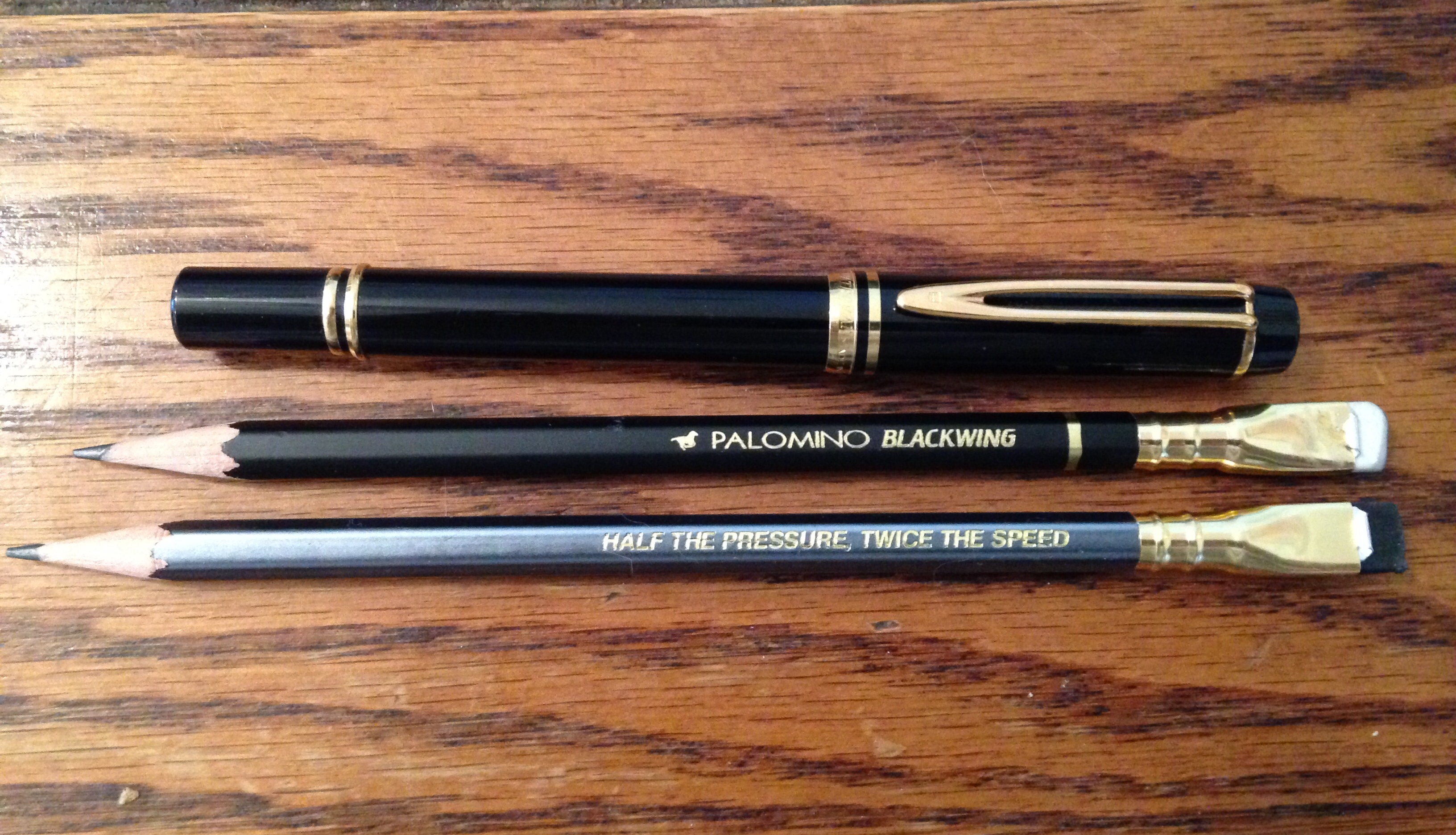
I adore Blackwing pencils. I’ve experimented with fountain pens. But as I’ve mentioned before, I’m left-handed, and I smear when I write. But that doesn’t have to be the case. The way I figure it, if Django Reinhart could use his mangled left hand to become a master of Jazz guitar, with a little effort I can manage the far simpler task of not dragging my hand through pencil lead or fountain pen ink. No excuses.

So here’s the plan. I’ll hang on to the cell phone, to email, to texting. But I can stretch and I can do more, I can really write with pen with pencil with paper. It doesn’t have to be often. But it can be once in a while. I can give myself the pleasure of writing. I can give someone else the gift of a letter.

I’m a greedy little soul when you get right down to it. I want to create lasting connections in any way I can. I want the people I love to know it, without any question in their minds. But here’s the thing: I’m greedy for all of us. Grab a pencil and write. And trust me about the Blackwings. Those pencils practically write for you. Just get them started. “Half the pressure, twice the speed.” Have fun. Let’s all keep an eye on our mailboxes.