POST #39: WHAT WE DO. WHO WE ARE.

FullSizeRender (3)

 Lazar, Detroit, 1920

Really, no one could figure out how he did it. He was the marvel of the neighborhood. Quick and confident and proud, he never made a mistake.

He was a tiny, compact little man, wrapped in an apron. Standing tall behind the counter of his grocery store. He added every figure in his head. Every account, every transaction was there, etched clearly in his precise and ordered mind.

A very smart man. A grocery man.

A man who selflessly extended credit to his neighbors so they could bring food home to their families when times were hard.

A kind person.

***

David, Oswiecim, Poland, 1939

There he is, his chin jutting out proudly, his arm draped casually around the shoulders of his childhood friends, a bold, almost insolent grin on his face. A yellow star is crudely stitched onto his breast pocket.

Famous for his jokes (who else would have shoved the goat through the door when it opened for Elijah?) he knew the prayer book so thoroughly his hands made grip marks on the leather.

He will run away soon. They will catch him. They will hold him for five long years. The horrors were unspeakable. So he never spoke of them.

A new country and a new start.   Bent now from his suffering, but still powerfully strong, he works first as a bellhop. Then he stands for decades at a machine in a factory.

We knew he was never the same but we never knew who he’d been.

He was so very tired. But let a small child catch his eye? Radiance would spread over him that could warm the sun itself.

A kind person.

***

Erv, Chicago, 1960

No question about it, he is the coolest guy in the room. Hair brushed back, perfectly dressed. No double creases ever.

Nothing handed to him on a silver platter either. No silver spoons touch his lips. He’s been working since forever. Proud of it.

This guy truly knows how to be a friend. He’s got your back. Wait, Better than that. He’s figured out how to help everyone avoid making mistakes. He is beloved.

Don’t be fooled by the posing though. He knows how to turn a phrase. He can write poetry too.

Falsely accused, he refuses to capitulate to a bullying professor. He is denied graduation for a year. But he stands firm. He is right.

He is vindicated.

An eye doctor: he goes on to become one of the finest and most caring healthcare practitioners anywhere. Now he’s got everyone’s back.

A kind person.

***

Me, Bloomfield Hills, 1975

“She’s the smartest girl I’ve ever met. “

It wasn’t true. It couldn’t be true. The person who made this declaration really was smart—brilliant even. What on earth could I have said that afternoon?

I really don’t remember.

I do remember sitting and talking to him though. I didn’t know enough to make pronouncements about anything at all. If I had, I’m certain I wouldn’t have been right.

I remember talking to him. I remember listening to him. I remember a gentle and generous conversation. He was nice.

That’s all. It wasn’t hard to be kind.

And at that time, for that boy, that might have been just enough.

I’m glad.


Above photo by Croze, Blessing and others: from The Saarinen Door,  published by Cranbrook Academy of Art and Printed by the Cranbrook Press c 1963.


Post #38: The Tower of Nickels and Dimes

IMG_1046POCKET CHANGE: 1961

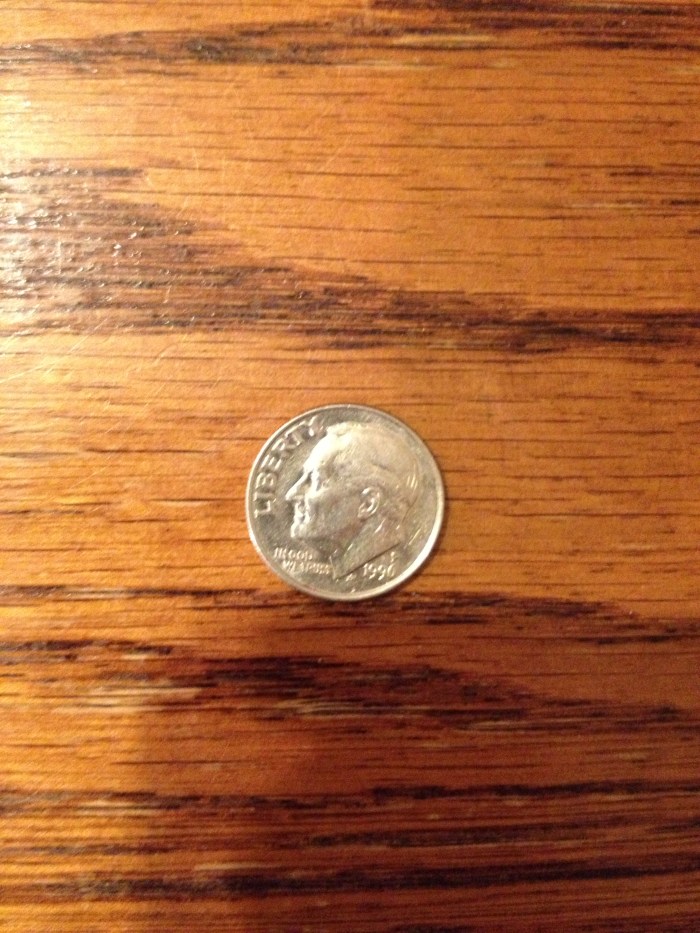
My Grandpa Lou would walk in the door. A kiss and then his hand would reach into his pocket. From his fingers would come a waterfall of coins clattering and clinking and plunking! I was too small to touch them. Too small to even know what they were for. All those pennies and nickels and dimes and quarters were shiny and rattley and meant for me. Spare change scooped from his pocket every night with the nonchalant precision of a soda jerk digging out a double scoop of Fudge Ripple. Once in a while a real Indian Head nickel or a steel penny, still in circulation then, would be blended into the handful, a curious and alluring whisper from his past.

What was he doing? Building, of course. Little by little, my Grandpa was building a Tower of Nickels and Dimes for me, his tiny F. W. Woolworth. Coins for my bank. Coins for my future.

ONE THIN DIME: 1966

Morning Kindergarten or afternoon, it didn’t matter. The rule was the same. You came to school with a nickel and that nickel was for one thing only. Put your nickel in the slot, twist the dial and a perfect little pint would tumble into your hand. The Milk Machine. No one ever drank white milk when there was chocolate available. Everyone drank straight from the carton.

But on the days where my mother was out of nickels and only had a dime to give me? Well there really was no choice.

I would buy a ten-cent Eskimo Pie from the Good Humor Man at the corner instead and eat it on the way to school.

I’m sure no one ever knew.

ALLOWANCE: 1967

We worked all week. Toys in the toy box. Books on the shelf. All the paper napkins folded into triangles. Back and forth from the table to the sink, plate after plate after plate. Don’t forget: use two hands!

We worked all week. We waited all week.

And on Fridays we each earned a dime.

I saved them all. Collect ten for a trade with Dad for a real grown up dollar bill.

Work and save and work and save. All my dimes together bought my own Incredible Edible set. Now that I earned my own money I could even make my own food. Life was good.

HALF DOLLARS: 1972

Full of a good dinner, surrounded by those he loved best, my nattily dressed Grandpa Nate would lean back in his chair and smile.

We knew what was coming. So did he. With a sign to my grandmother a bag was procured from who knows where and it’s contents spilled out on the tablecloth.

A king’s ransom! A pirate’s bounty! A rich man’s loot!

All for us! All for us! All for us! The coins were heavy and impressive and our heads swam with the possibilities of it all! Piles of Franklin half-dollars all there for the taking. So much money. We could buy anything in the world!

But alas! Euphoria is short lived. The coins were to be treasured and to be saved, but never to be spent.

We sadly concluded that being rich has its burdens.

2-DOLLAR BILLS: 1981

If you go there, you’d better know how to order. Get in line; grab a tray and pay attention! Hey you! Do you want French fries, onion rings or fried broccoli? For your burger, double, triple, quad or quint? Your bun? Kaiser, onion, plain or WHAT? Want mushrooms, grilled onion, pickles or peppers? Order it now or forever hold your peace! And if you decide on condiments only say what you want, not what you don’t want. DO NOT MESS THIS UP!

If you follow the above rules exactly, Krazy Jim’s Blimpy Burger will give you the best burger on the planet. And in keeping with their Krazy ways they will often fork over a $2 bill for your change. You’d better know what to do with it! Cherish it.

PENNIES ON STREET: Always

I seem to spot them everywhere.

On the sidewalks and the side streets. Dug out of the corners of car and of the couch. They gleam at me. Heads up or heads down. I scoop them up and I save them. I squint for the dates and wonder about how many fingers have touched them, how they were lost, how much further will they travel? Little silver and copper time capsules! And they jingle in my pockets.

Is it lucky to find a penny or a coin? You tell me.

Perhaps it’s just as lucky to spot a dandelion about to curl open to the sun, lucky to notice a person who took the time to hold the door, lucky to discern meaning from the lines of a poem.

But it’s so much harder to hold those things in your hands, to jingle them in your pockets.

So I save all the coins I find, knotted into handkerchiefs in my drawers, zipped tight into a special pocket in my jacket, sometimes clutched in my fists.

I save them because I have a plan. Someday for someone I’ll dig deep into my pockets and scoop out a handful of coins. . From my fingers will come a waterfall of coins clattering and clinking and plunking. I’ll be building someone their own little Tower of Nickels and Dimes.


POST #37: THE SCREEN TO THE WORLD


FullSizeRender (4)

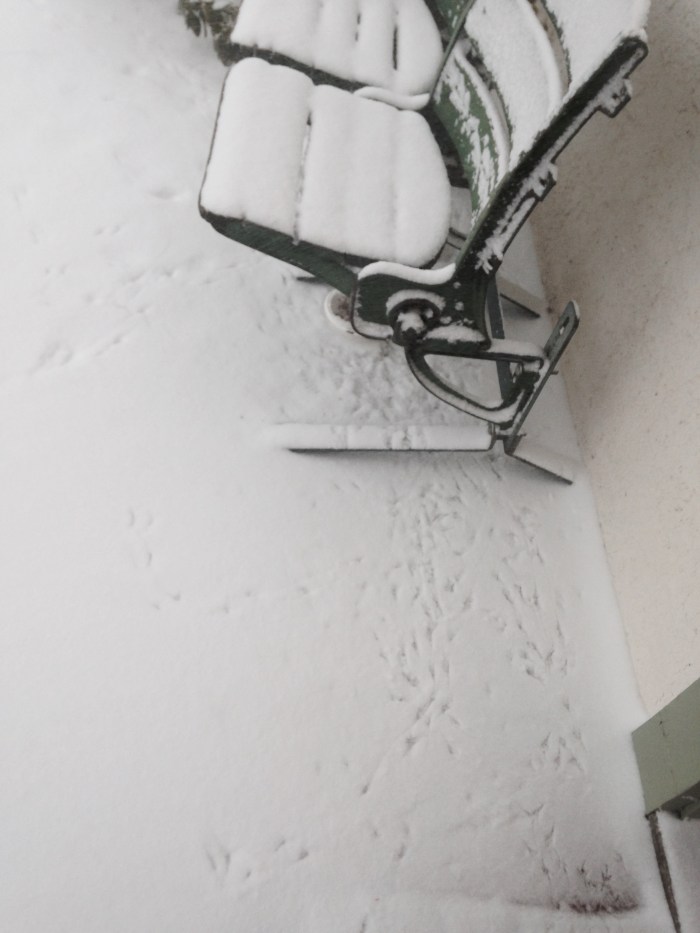
It’s an assault from within and without.

We’re urged to stay in. Of course we’ll stay in.

TV weathermen, shirtsleeves rolled, buoyantly flapping their arms in the general direction of indecipherable, crayola bright maps are glorying that–at last!– the camera lenses settle on them for more than a heartbeat.

The men match their ties to the seasons. The women flex their biceps in sleeveless dresses and earnestly intone about wind chill factors and whiteout conditions. No mistake about it — everyone’s teeth are white as snow.

After 20 minutes or so of Mensa worthy graphics and cozy chats with regular people about soups and shoveling and sock liners, I turn off the set.

Instead, I look out the window.

It’s just before dawn. It’s still quite dark. The street lamps are glowing yellow and in that light I can just see the snow swirling, each flying with the daring do and tenacity of a million little Eddie Rickenbackers engaged in a tiny mid-air dogfights. How wonderful then that each flake is destined not to crash, but to calmly descend to its proper place, one atop the other.

Unused to quiet at this ungodly hour I’m sure it should be silent. But that’s as foolish as Aristotle’s untested assertion that heavy objects fall faster then light ones. It took Galileo’s climb to the top of the Tower of Pisa with his to put that fallacy to rest. Because of course, all silence is full of sound.

I listen and there it is! A muscular wind that leaps from its corner at the sound of the bell then feints and punches like a prizefighter. Wait! And just then, it blows with the power of a thousand sneezes!

If you believe what you see in picture books, snow comes down straight from the sky, clouds billow like so much marshmallow fluff, and the sun is conveniently tucked in the upper right corner. Nice and neat and we’re done.

But this snow does not stay between the lines. As I watch the snow comes crazily from all angles, riding the curls of the wind as it moves across the lawn, and rattles down the empty street.

Our beloved little dogwood trembles alone on the front lawn, its branches splayed like disheveled hair on a pillowcase. It’s immobile unmoving, — um it’s a tree, after all—but I shudder. I’ve just remembered that the tree, and so much else out there, is alive too..

Just then a little chipping sparrow lights on the snow-covered bush in front of me. It looks about for a moment then shakes itself off before diving deep into the labyrinth of the knitted branches.

Smart little thing! It’s found a safe cavern, as snug as the bed sheet fort my boys would construct with chairs and pillows under the kitchen table. Maybe it has stashed some seeds or crumbs there, just as my boys once hoarded bags of Rold Gold™pretzels and Apple & Eve™ juice boxes.

How many creatures then are bravely burrowed just out of sight? There is no Accuweather Minutecast ® to tell them when it all ends. They snuggle, they dream, they wait. They do know how to wait.

Can they feel the end of a storm? If we try, can we?

Instead we obsessively watch our glowing screens, our nervousness increasing with each 8-minute update, like anxious readers halfway through a book who impatiently jump to the last page to find out the ending.

If we didn’t watch would we fear for the end of the world? Or would we burrow in, believing as hard as we could that it would have to stop sometime? And when it did stop, we once again would dig our way out.

Either way we wait. We are not in charge. When was the last time I sat still for this long?

I look out again. The light has increased so the whiteness of the sky blends with the billows of the snow. The snow is blowing sideways. I didn’t know that was possible. I bend down to check my compass. It’s coming from the east.

I have no idea what time it is. But I haven’t moved from my window. Snowflake Bentley photographed thousands of snowflakes, each one of them ephemeral, beautiful and different from every other. I can see them piling atop each other, the piles rising and rising.

I know there are mathematical formulas to determine the exact amount of snowfall per hour. But I don’t care.  Let me leave that for others. But I wonder if my lifelong aversion to math relates to the truth that I really don’t want to control the world and it’s forces?

What I want very much is to be immersed in the world. To feel it. To respond to it. To respect it.

We are urged to stay in. Of course we’ll stay in.

But I go out.

Just for a moment I do. The snow, bolstered by the wind, peppers my face. It smears my glasses. It is so very cold. My outside breath feels thick, almost tangible. I can see it.

But I smile. Because I can actually feel it.


PUSHING PAST DISCOMFORT

FullSizeRender (3)


I still love them. In truth, I still covet them. Gyroscopes, the best spinning tops ever. Quick flick of the wrist and you could make it perch on tiny pinpoint or even balance on a piece of string. Though the whirl was powerful, the balance was so extremely delicate. The tiniest wobble would topple it from its fragile perch.

This week, we wobbled and fell. This week we found ourselves helped to rise once more to our feet. This week we found ourselves lofted on high, set to spin once again.

***

Over the years I’ve improved at the engage, parry, and retreat of social connection. Blunt tip, foil fencing matches which begin with a salute and end with a dignified bow. I can do this. Really I can. I know when to break eye contact, when to refill my wine glass or garnish my plate with more crudités. A deep breath and then once more into the fray, dear friends.

But I steal nervous glances at my watch. But I inch towards the door.

How is everyone else so happy and comfortable?

What if I am snubbed ignored, avoided?

What if we threw a party and nobody came?

Is it over yet?

Only me. Only me. Only me.

Only not.

***

This week we were caught off –guard. We were shaken by the call. Ninety-two should not be a surprise. But somehow it is. Sadness, resignation, feelings with no words split us like an ever-widening chasm. We balanced on the edge.

There was no time to think. There was no time to fuss. There was no time to clean. All we could do was send out the word.

All we could do was our best.

And everyone came.

***

They did not come empty-handed.

Like Thanksgiving dinner in January, like a voluptuous Roman banquet, like an all-you can eat Sunday supper, the house was suddenly filled with food. Platter upon platter of bagels and lox, cakes and cookies, roast chickens, and deli sandwiches. Russian dressing and potato salad and pickles on the side.

My mother-in-law loved to eat. How could people have known about all her favorites? She yearned to be part of gatherings. And everyone was here for her, together in her honor.

Mostly they came alone, pushing past the red door, pushing past their discomfort. Jovial masks set aside, their faces were as open and as vulnerable as ours. When we relaxed, so did they, uncertainty and fear utterly useless and happily tossed aside.

Of course the world is full of rebounds and second chances. This is good. But the truth is there are times in life when you only get one chance to do the right thing. Thanks to everyone who did so for us. We’ll remember. We promise to do the same.


z”l LSF

ON THE EDGE OF THE KNOWN WORLD: 1972

IMG_1045If you wanted it—and I mean really wanted it—there were rules to follow. You had to be willing to shoehorn yourself out of your top bunk in the black licorice dark of night. You had to be brave enough to survive the seemingly bottomless drop to the carpet if your groping foot somehow missed the ladder again. You had to have the conjuring abilities of Houdini escaping a straightjacket to be able to in fling your nightgown off and your sweatshirt on in one single fluid motion.

I was so good at this!  But I should have been. I did this every single Sunday morning.

I made my way downstairs. The walls of the house seemed almost to breathe with a steady rise and fall to the gentle rhythm of everyone sleeping.

My mother was already waiting in the kitchen. She’d beaten me downstairs again. I come from a proud line of light sleepers, early risers. Plus she knew how to be quiet. My mother could get out the door without a squeak of her shoe or a jangle of her keys. She motioned for me to follow and I did.

Buckled into the Delta 88 we were on our way. If we got to the bakery early enough—and we almost always did–the bagels would be hot out of the oven. These were Detroit bagels, small and a little sweet and really pretty good. Better still were the onion rolls, the round flaky ones and the square ones that were called New Yorkers. A perfect silver rectangle of Philadelphia Cream Cheese. Sometimes we added an incredibly valuable pink packet: prepackaged lox, yearned for mouthfuls to be carefully divided and dolled out only in slivers. Once in a great while we’d get my very favorite, a whole chunk of sable.

Greedy little thing that I was, greedy little thing that I am, I wanted more. I always did.

My mother got that for me too. Three inches thick and an all day read: The Sunday New York Times. Pages and pages of jazzy, neon blitzed sophistication and elegance. I couldn’t believe that it miraculously appeared where I lived; on what I was sure was the edge of the known world, the suburbs of Detroit. Hot off the presses, the world and all it’s possibilities, now lay in my lap. Along with hot bagels in a crackling brown bag.

If there was a straight route home we never took it. Instead we meandered, driving slowly through the sleepy, tree lined streets of Birmingham. It was much too early for anyone to be out. The trim houses were Tudor or brick or ranch and contained by sidewalks. They were all different but uniformly tidy, with yards that were so manicured they appeared to have been combed out and then precisely hand-edged with nail scissors. Through the open windows, even the breeze felt just right.

As we drove slowly, yearningly past I could almost imagine each perfect house tied up with a bow. Unmade beds, messy closets, dishes in the sink an unimaginable impossibility. Did they read The New York Times? Did they live The New York Times?

Someday in Times Square I’d pluck newly folded copy of the Sunday Times right from a newsstand’s big stack. It was Saturday night but I’d already be living Sunday.

Someday, in a doorman building on Riverside Drive, piles and piles of Sunday papers would teeter in unread towers as night gowned and exhausted, I double fed infant twins.

Someday I swore I’d finish reading an article or maybe two—just as soon as I got back from a pick up or a drop off. Just as soon dinner was made and the laundry folded. I swear.

Someday Sunday mornings would again be very quiet. Three inches thick and an all day read.

The sun was coming up. We drove home. Everyone else was waking up. We were home once again to the happy cacophony of TV and spilled dog food and unmatched pajamas. But we had hot bagels. And we also had the delicious possibility of The Sunday New York Times.

Thanks, Mom.


Tangled Quilts

FullSizeRender (2)I don’t really remember the movie. But I do remember this scene.
At the end of Reuben, Reuben, (Tom Conti and Kelly McGillis, 1983) the two lovers are outside in a park and they angrily part ways. It’s over.

But as the woman leaves she turns and looks back tentatively to the man. He’s looking down and misses her vulnerable, longing glance. She turns away. Just as she turns away, the man looks up hopefully but sees only the woman’s back, walking resolutely away from him. And so the relationship irrevocably breaks, lives are forever changed, for want of split second of timing.

I can hardly bear it. So much conveyed in a glance. But the glances were missed. What would have could have happened?

**

I desperately do not want to miss glances. Nor do I want to misconstrue notes or emails or texts. And those looks and notes and calls keep coming at me, they come at all of us, so thick and so fast! I try to keep up—I can’t really keep up. I delay, I phumpher, I make mistakes. I know that I do. Worse, even if I am looking up am I reading that glance or that text the right way? What am I missing? What might I misinterpret? And selfishly, how fearful might misunderstanding make me? Worse still, if I err, how alone?

Interpreting glances, bold attempts to understand the clumsy, truncated haiku of a tweet, text, or an email is an art form, one made of split second timing and the kind of bravery that cliff jumpers possess.

I know it’s a kind of bravery worth cultivating. Bravery worth having.

Even though I’ve placed so much emphasis on the meaning of a fleeting glance, on possibly misinterpreting the off-hand wording of a message, there is something even more important to consider.

If you’ve ever said, “I love you”, you know. Because if one is brave enough to say those words, to feel them, to mean them, one has to be brave enough to fight through the inevitable insecurity and fear—all the missed glances, all half-written thoughts—that will follow.

A relationship is far more than a series of glances—missed or otherwise — haphazardly laid atop one another. Instead I think of relationships as wonderfully tangled quilts —those sewn together steadily, slowly, over time– which we can pull from our bags and wrap ourselves in whenever, however we need to. These are the words and the stories and met glances that knit together to tell the deeper stories of our connection, of our lives and to remind us, as we all need to be reminded sometimes, of our love.

We want our connections to be like a firm, unbroken chains when too often they’re twisted like those little metal conundrum puzzles. The kind that take patience to work through and give such pleasure when they’re completed.

Remember the puzzles. Reach for the quilt when you need it. Much love.

TANGLED QUILTS

FullSizeRender (2)

I don’t really remember the movie. But I do remember this scene.

At the end of Reuben, Reuben, (Tom Conti and Kelly McGillis, 1983) the two lovers are outside in a park and they angrily part ways. It’s over.

But as the woman leaves she turns and looks back tentatively to the man. He’s looking down and misses her vulnerable, longing glance. She turns away. Just as she turns away, the man looks up hopefully but sees only the woman’s back, walking resolutely away from him. And so the relationship irrevocably breaks, lives are forever changed, for want of split second of timing.

I can hardly bear it. So much conveyed in a glance. But the glances were missed. What would have could have happened?

**

I desperately do not want to miss glances. Nor do I want to misconstrue notes or emails or texts. And those looks and notes and calls keep coming at me, they come at all of us, so thick and so fast! I try to keep up—I can’t really keep up. I delay, I phumpher, I make mistakes. I know that I do. Worse, even if I am looking up am I reading that glance or that text the right way? What am I missing? What might I misinterpret? And selfishly, how fearful might misunderstanding make me? Worse still, if I err, how alone?

Interpreting glances, bold attempts to understand the clumsy, truncated haiku of a tweet, text, or an email is an art form, one made of split second timing and the kind of bravery that cliff jumpers possess.

I know it’s a kind of bravery worth cultivating. Bravery worth having.

Even though I’ve placed so much emphasis on the meaning of a fleeting glance, on possibly misinterpreting the off-hand wording of a message, there is something even more important to consider.

If you’ve ever said, “I love you”, you know. Because if one is brave enough to say those words, to feel them, to mean them, one has to be brave enough to fight through the inevitable insecurity and fear—all the missed glances, all half-written thoughts—that will follow.

A relationship is far more than a series of glances—missed or otherwise — haphazardly laid atop one another. Instead I think of relationships as wonderfully tangled quilts —those sewn together steadily, slowly, over time– which we can pull from our bags and wrap ourselves in whenever, however we need to. These are the words and the stories and met glances that knit together to tell the deeper stories of our connection, of our lives and to remind us, as we all need to be reminded sometimes, of our love.

We want our connections to be like a firm, unbroken chains when too often they’re twisted like those little metal conundrum puzzles. The kind that take patience to work through and give such pleasure when they’re completed.

Remember the puzzles. Reach for the quilt when you need it. Much love.

NOW HOW CAN THIS BE?

IMG_4258Now how can this be? I know him so well. I’ve known him for so long. I love him so much.

I wasn’t quite sure that I recognized him, the sweet and animated face of this beloved person. It hadn’t been that long. A few months? But even so.

Looking at him I felt the angles shifting, a real-life Picasso, cubist period. He seemed to be changing before my eyes. Squint as I might I couldn’t get a clear view. I was shy and awkward. He grinned anyway. My boy.

It didn’t quite make sense.   I should have been able to see him clearly, to recognize him! I kept his photos close, looked at them often. But then really I should have known.

Photos don’t tell the whole story but rather the stories we want them to tell. I look at my own photo, my profile shot, the image of myself that I want all of you to know me by. It was taken on a good day where I look relatively thin and my hair is reasonably neat.   My cat, Big Nick, is not expressing utter devotion but actually demanding lunch. My photo is not just my presentation of myself, but my shield. You’ll know me by what I want you to know. As Wilfred Sheed once said of author Clare Boothe Luce, “She crafted herself a myth and lived up to her invented creation. “ Don’t we all?

We primp, we post and we manipulate shots for best angles covering ourselves in photos like a Roman phalanx heading into battle, their overlapping shields an impenetrable barrier to the coming onslaught.

And why not? Why not, indeed.

***

After our wedding I actually refused to look at the wedding photographs for months. I was afraid if I looked at the photos my own memories might get lost. They were not. And so I remember:

*That there were lilacs strewn everywhere and the scent, as always, was intoxicating.

*The sheer terror that overcame me before I walked down the aisle.

*My husband’s adorable and scrunched face when he had to take a bite of vanilla wedding cake when he yearned for chocolate.

*The swoon that nearly overcame me as I circled my husband under the huppah. Or perhaps I swooned from something else entirely?

*The solitary wedding guest, hidden away in small room, who spotted me and thinking me lost at my own wedding, invited me to share her slice of cake.

Not one of these images is captured on film but they are still firmly etched in my memory.  I am so grateful.

***

And yet, I think, all of us deserve the right, if we so choose, to protect ourselves with the images we want to present to the world. But sometimes, maybe even often, that protection can be a barrier to what many of us want even more. To truly know and connect with those we love most. To remember things in a way that even with a photographic record we might otherwise not.

***

And so to my boy, shifting and changing before my eyes. The person behind the photos. He was still there. I knew it for sure the moment he hugged me hello.

.


FOR ALL TIME AND BEYOND TIME

IMG_3013The phrases still echo in my ears and rattle around my brain.

After innumerable dozy hours of class time, my hand mechanically raising and lowering to answer questions for perfunctory pats on the head, having written essay upon essay upon essay, there are really only two phrases that I recall from school.

“We are all creatures of habit.” “Crowds are always potentially dangerous.”

That is all. That is it. And it’s absolutely cringe worthy that these jewels of wisdom are fished from the maelstrom of 8th grade, compliments of Mr. Wepman’s psychology elective held in the cinder blocked glory of Warner Junior High School. But there you have it.

Mr. Wepman had noted that each of us chose the same seats in his classroom day after day. He challenged us to sit somewhere else. We tried. It was awkward and uncomfortable. Even unnerving. We wanted our seats back. Most of that lesson is a blur, but that one part remains quite clear: some of us, maybe even all of us, grasp for safety in the rubric of routine.

*The coffee poured into the same chipped mug every morning.

*The parking space at the grocery store we gravitate to every single time.

*The tattered shirt we wear when we feel a bit hollow or need to feel lucky.

*The egg and toast placed just so on our breakfast plates.

*The path we walk from the train to the office.

*The seat we choose in the theatre.

*The song we play over and over.

 The bell clanged and we struggled out of our seats. “Remember,” he said as we prepared to throw ourselves into swirling mass of kids rushing through the hallways, “be careful out there. Crowds are always potentially dangerous.”

And so they are. From junior high school hallways to the streets of our greatest cities.

We’re told that the world, and all it’s limitless potential, spreads before us like a blanket shaken out on the soft grass before a picnic. It’s vast and thrilling, and there just for us. How can we not embrace it, take as full advantage of all it’s excitement and possibilities? To turn inward, to curl into a protective shell like a sow bug is to go nowhere, to do nothing, to wither. But we are attuned and aware always. To live life afraid is not to live. We need to live in the world. The world needs us to live in it.

In my dreams there is some magnificent, unknowable force in the world that continues to protect those we love and care for from crowds and from dangers. I hope that it’s so. And for those for whom protection lapses, it’s my fervent hope that somehow, somewhere they are cared for and comforted and beloved for all time and beyond time.


TAKE FLIGHT

FullSizeRender (2)

1920

She was tiny and dark, lithe and nimble. An effervescent stream of seltzer, shot right from the bottle.

The story, as I heard it, was this: that once upon a time, Little Gram, our grandmother Ann Venitsky Chudler, was our own Superman, able to “leap tall buildings in a single bound.”

Well, perhaps not quite. But long ago in raucous games of tag played wild and free on the flat city rooftops, she was an elusive sprite, leaping away from the outstretched hands of her playmates, so fearless that she could escape a tag by literally leaping over the gaps between the buildings.

Our grandmother could fly.

***

1970

Really, no one ever knew where we were.   How extraordinarily wonderful was that?

Equipped with red rubber schoolyard balls and a few plastic jump ropes, afternoons after school we were out and about in the neighborhood, roaming around making up games to play. We lived where flat tracts of land were fast being crammed with Lego like constructions as builders raced from quarter acre to quarter acre.

The rules were that weren’t any rules. So the half constructed houses in our neighborhood became our playground. Games of intrigue, games of tag, we ran up and down the half finished stairs, tumbled through open windows, perched casually and coolly on rooftops. And most memorably, once on a dare I leapt from an upper floor balcony into the soft dirt below. I know all about Galileo’s experiment from the tower of Pisa. Science confirms that I fell hard and fast. But then and now I thought I lingered in the air. I was floating, I was flying.

***

1950

For our Grandmother, the games of tag are a memory. Around her swirls a hive of activity, husband, children, sisters and family revolve around her center. There is always something to do, someone who needs something.   She does it. Tied firmly into an apron she makes porcupine meatballs, ethereal lemon meringue pies. No one ever made a bed better. She grows tough and hearty roses that reach toward the sky. Our grandmother’s tiny feet are now closed into perilously high heels, her feet firmly planted on the ground.

But are they really? Often and always, those tiny high-heeled feet trod a path back and forth to the local library. Curled in an armchair late at night she reads and reads and reads.  Alone and in the quiet, there are times she is sure that she is flying.

***

NOW

We face off on an overcast fall afternoon, my middle schoolers and I. They sit; some slumped, some squirmy at their desks. I sit, trying not to slump or squirm, facing them at mine. They are tired and tense. Maybe I am too. For today then, maybe just for today, the lesson becomes looser, more fluid.

I ask them to take out paper and pencils. I want them to draw.  They do. I open a book and begin to read. The room is completely quiet and calm, save for the scratch of pencils on paper and the rise and fall of my voice.

“Something above was calling him imperiously, and he made for the steep little tunnel which answered in his case to the graveled carriage drive owned by animals whose residences are nearer to the sun and air. So then he scrooged again and scrabbled and scratched and scraped, working busily with his little paws and muttering to himself, “Up we go! Up we go!” till at last, pop! His snout came out into the sunlight and he found himself rolling in the warm grass of a great meadow.”

Kenneth Grahame, Chapter 1,  The Wind in the Willows

After a time, the bell rings of course. It always does. We shake ourselves and start to move, tentatively, awkwardly, as if waking from a dream. “You know,” said one of the girls said as we were packing up, “That was so nice I almost felt as if I was floating.” I felt the same.

There are so many ways to fly. How wonderful that our Grandmother knew that too.